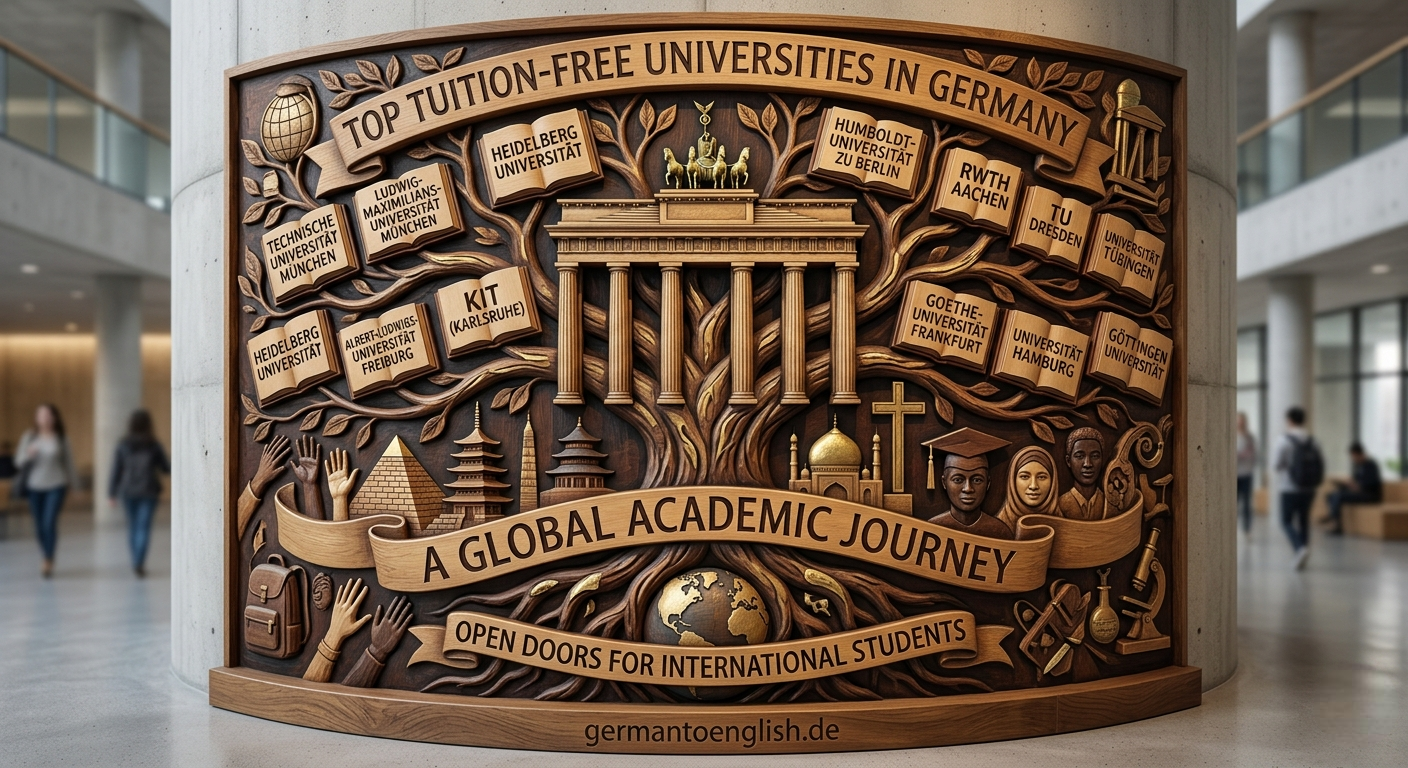
Germany has become one of the most popular destinations for international students seeking high-quality education at an affordable cost. While students in countries such as the United States, the United Kingdom, Canada and Australia often pay thousands of euros in tuition fees every year, Germany offers a different approach. Most public universities charge little to no tuition fees, making higher education accessible to talented students from around the world.
This unique education system has helped Germany attract hundreds of thousands of international students. Whether you want to study engineering, computer science, business, medicine, artificial intelligence, data science, social sciences or humanities, Germany offers world-class universities that are internationally respected by employers and academic institutions.
Many students are surprised when they discover that Germany's public universities often charge only a small semester contribution instead of expensive annual tuition fees. However, understanding how the system works is important before making plans to study abroad.
In this guide, you will learn about the best tuition-free universities in Germany, admission requirements, living costs, scholarships, English-taught programs and what international students should know before applying.
Germany is not only Europe's largest economy but also one of the world's leading destinations for research, innovation and higher education. Students from India, Pakistan, Bangladesh, Nepal, Nigeria, Egypt, Brazil and many other countries choose Germany because it offers excellent academic opportunities without the burden of massive student debt.
Some of the major advantages of studying in Germany include:
For many international students, Germany represents a combination of affordability and academic excellence that is difficult to find elsewhere.
Many students misunderstand the term "tuition-free." While public universities in Germany generally do not charge traditional tuition fees, students are still expected to pay a semester contribution.
This contribution usually covers services such as:
Depending on the university, the semester contribution is often between €100 and €400 per semester. Compared to tuition fees charged in many other countries, these costs are relatively low.
Students should remember that living expenses remain the largest financial consideration when studying in Germany.
The Technical University of Munich is widely regarded as one of Germany's best universities and consistently ranks among the top universities in Europe. TUM is especially popular among students interested in engineering, technology, computer science, artificial intelligence, robotics and natural sciences.
The university maintains strong partnerships with industry leaders and offers excellent research opportunities. Graduates from TUM are highly sought after by employers both within Germany and internationally.
Popular study areas include:
Munich is also one of Germany's strongest economic regions, providing excellent internship and employment opportunities.
Founded in 1472, LMU Munich is one of Europe's oldest and most respected universities. It offers a broad range of academic disciplines and has produced numerous Nobel Prize winners throughout its history.
LMU attracts students from all over the world because of its strong academic reputation and research excellence.
Popular fields include:
The university combines traditional academic excellence with modern research facilities and international collaboration.
RWTH Aachen University is often considered one of Germany's strongest institutions for engineering and technical education. Located near the borders of Belgium and the Netherlands, the university attracts students from more than 130 countries.
Its close relationship with major industries provides students with practical experience and strong employment prospects.
Key areas of study include:
Many international students specifically choose RWTH Aachen because of its outstanding reputation in engineering and technology.
Heidelberg University is Germany's oldest university and one of the country's most prestigious institutions. It combines centuries of academic tradition with cutting-edge research.
The university has a strong international presence and welcomes students from around the globe.
Areas where Heidelberg is particularly respected include:
The city of Heidelberg itself is considered one of Germany's most beautiful student cities and offers a vibrant academic atmosphere.
Humboldt University has played a major role in shaping modern higher education worldwide. Located in Berlin, Germany's capital city, it offers students access to a rich cultural, political and economic environment.
The university is particularly known for:
Berlin's international environment makes it an attractive destination for students seeking both academic and cultural experiences.
The Free University of Berlin has built a strong international reputation and attracts students from around the world. It offers numerous international partnerships and exchange opportunities.
Popular study fields include:
The university's research-oriented approach and global outlook make it especially attractive for international students.
The University of Freiburg is known for academic excellence and its focus on sustainability, environmental research and innovation. Located near the Black Forest, Freiburg offers an excellent quality of life and a student-friendly environment.
The university is particularly respected for:
Students who appreciate nature, sustainability and a relaxed atmosphere often find Freiburg particularly appealing.
The University of Hamburg is one of Germany's largest universities and offers a wide variety of degree programs. Located in Germany's second-largest city, students benefit from strong economic opportunities and an international environment.
Popular areas of study include:
The city's status as a major international trade hub provides excellent networking and career opportunities.
Karlsruhe Institute of Technology is one of Germany's leading technical universities and is highly regarded in engineering, technology and computer science.
Many international students interested in innovation and research choose KIT because of its strong academic reputation and industry connections.
Popular programs include:
One of the biggest concerns for international students is language. While learning German offers significant advantages, it is possible to study in Germany without being fluent in German.
Thousands of degree programs are available in English, especially at the master's level.
English-taught programs are commonly available in:
However, students planning to stay in Germany after graduation should strongly consider learning German to improve career opportunities and social integration.
Although tuition fees are low, students must still budget for daily living expenses. The amount varies depending on the city.
Typical monthly expenses include:
Most international students spend between €900 and €1,400 per month depending on their location and lifestyle.
Cities such as Munich, Frankfurt and Hamburg are generally more expensive than smaller university towns.
Yes. Germany allows international students to work while studying, subject to applicable immigration regulations.
Many students take part-time jobs to gain experience and help cover living expenses.
Common student jobs include:
Work experience gained during studies can also help students transition into full-time employment after graduation.
Although tuition fees are already low, scholarships can further reduce financial pressure.
Popular scholarship opportunities include:
Students should research scholarship opportunities early because competition can be high.
Admission requirements vary depending on the university and degree program. However, most institutions require:
Students should carefully review the requirements of each university before applying.
Many students focus only on tuition fees and overlook other important factors.
Common mistakes include:
Proper planning can help avoid unnecessary stress and increase the chances of a successful study experience.
Germany has earned its reputation as one of the world's best destinations for affordable higher education. The combination of tuition-free public universities, internationally respected degrees, strong research opportunities and excellent career prospects makes it an attractive choice for students from around the globe.
Universities such as the Technical University of Munich, LMU Munich, RWTH Aachen, Heidelberg University, Humboldt University, Free University of Berlin, University of Freiburg, University of Hamburg and Karlsruhe Institute of Technology continue to attract talented students every year.
While living expenses and administrative requirements should not be overlooked, Germany remains one of the few countries where students can obtain a world-class education without accumulating massive tuition debt.
For international students willing to prepare carefully, improve their language skills and embrace a new culture, studying in Germany can be a life-changing investment in their future.

 ▼
▼
 Deutsch
  Artikel Quiz
 German Grammar