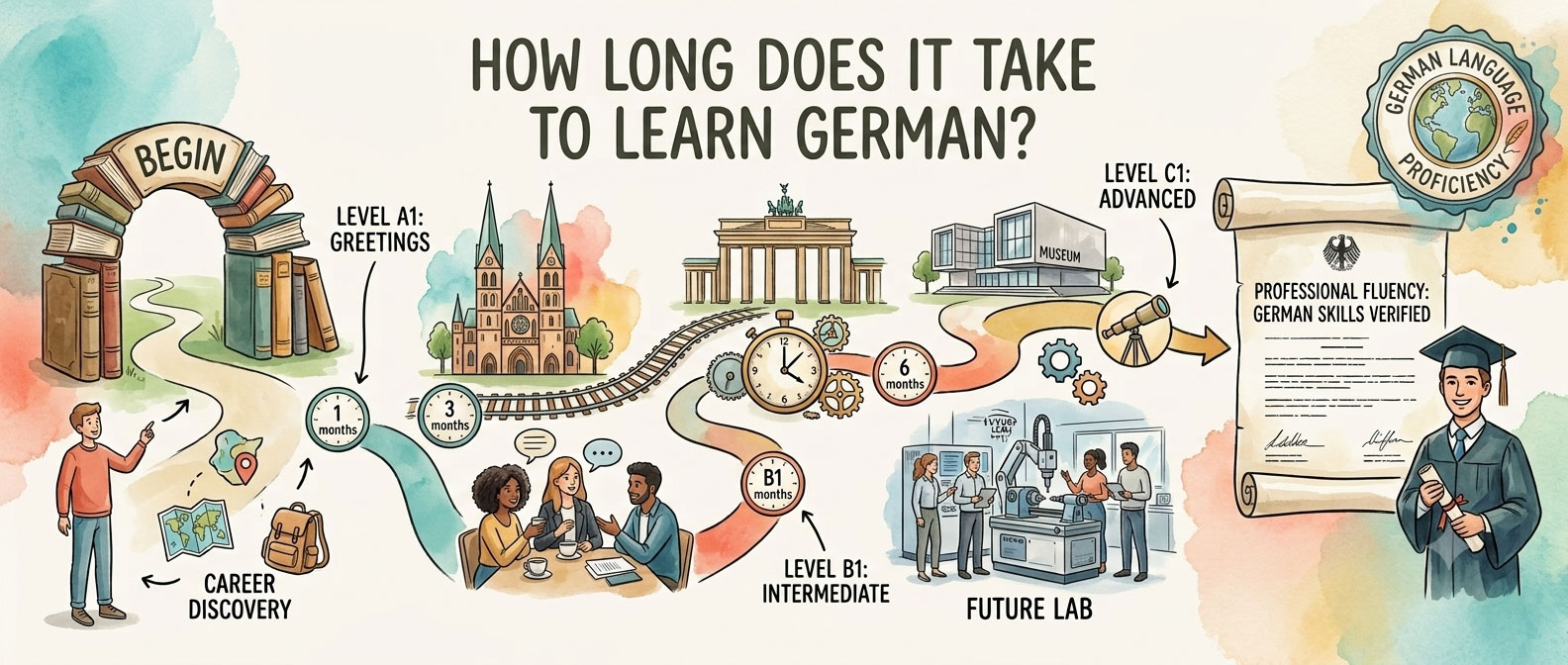
One of the first questions people ask before starting their German language journey is, "How Long it will take to Learn German?" The answer depends on several factors, including your current language skills, study routine, learning method, motivation and the level of German you want to achieve.
For some learners, reaching a basic conversational level may take only a few months, while achieving professional or academic fluency can require several years of consistent practice. Fortunately, German follows structured proficiency levels that make it easier to measure your progress.
Whether you are preparing to study in Germany, apply for an Ausbildung programme, work in Germany or simply learn a new language, understanding the expected learning timeline helps you set realistic goals and stay motivated throughout the process.
This comprehensive guide explains how long it generally takes to learn German, what each CEFR level represents, how many study hours are recommended and practical strategies to help you learn more efficiently.
German has a reputation for being challenging because of its grammar rules, noun genders, cases and long compound words. However, it is also one of the most logical and systematic languages to learn.
Many English words share common roots with German, making vocabulary easier to recognize than many learners expect. Once you understand the grammar patterns and practice consistently, learning German becomes much more manageable.
The level of difficulty also depends on your native language and previous experience learning foreign languages. Learners who study regularly and use German in daily life usually make much faster progress than those who rely only on occasional classroom lessons.
No two learners progress at exactly the same pace. Several factors influence how quickly you can learn German.
Someone who studies two hours every day while regularly speaking German will usually progress much faster than someone who studies only once a week.
German language proficiency is commonly measured using the Common European Framework of Reference for Languages (CEFR). These internationally recognised levels help learners and employers understand language ability.
| Level | Description |
|---|---|
| A1 | Beginner |
| A2 | Elementary |
| B1 | Intermediate |
| B2 | Upper Intermediate |
| C1 | Advanced |
| C2 | Near Native |
Each level builds upon the previous one and introduces increasingly complex grammar, vocabulary, listening, reading, speaking and writing skills.
Although every learner is different, language experts generally estimate the following guided learning hours for progressing through each CEFR level.
| German Level | Approximate Study Hours |
|---|---|
| A1 | 80–150 Hours |
| A2 | 150–250 Hours |
| B1 | 350–450 Hours |
| B2 | 550–700 Hours |
| C1 | 700–900+ Hours |
| C2 | 1,000+ Hours |
These figures are estimates rather than guarantees. Some learners progress faster through intensive courses or immersion, while others require additional time to master grammar and speaking skills.
A1 is the beginner level and serves as the foundation for learning German. At this stage, learners become familiar with the alphabet, pronunciation, everyday vocabulary, simple grammar and basic conversations.
Most students can introduce themselves, ask simple questions, understand common phrases and manage basic daily situations after reaching A1.
With consistent study of one to two hours each day, many learners reach A1 in approximately two to three months. Intensive language courses may reduce this timeline, while casual learning may take longer.
After completing A1, learners continue expanding their vocabulary and grammar at the A2 level. They become more confident in everyday conversations and can understand frequently used expressions related to work, travel, shopping and daily life.
Many students require an additional two to four months of consistent learning to complete A2, depending on study intensity.
B1 is considered an important milestone because many universities, Ausbildung programmes, employers and visa pathways may require learners to demonstrate at least this level, depending on their specific requirements.
At B1, learners can communicate independently in many everyday situations, understand longer conversations, express opinions and write more detailed texts.
Most learners who study consistently reach B1 within approximately eight to twelve months from the beginning of their German learning journey.
B2 is considered an upper-intermediate level and is often required for university admission, professional careers and many skilled jobs in Germany. At this stage, learners can communicate confidently on a wide range of topics and understand complex discussions.
Most students reach B2 after approximately 18 to 24 months of consistent study, although intensive courses combined with daily practice can shorten this timeline.
C1 represents an advanced command of German. Learners at this level can study at many German universities, work in professional environments and communicate fluently in both formal and informal situations.
Depending on study intensity and immersion, reaching C1 typically takes between two and three years for most learners.
C2 is the highest CEFR level and indicates near-native proficiency. Learners can understand almost everything they hear or read and communicate naturally in academic, social and professional settings.
For most learners, achieving C2 requires several years of continuous exposure, practical use and advanced language practice.
Yes, but the level you achieve depends on how much time you dedicate each day.
| Daily Study Time | Possible Progress in 6 Months |
|---|---|
| 30 Minutes | Strong A1 |
| 1 Hour | A2 |
| 2 Hours | Strong A2 or early B1 |
| 4+ Hours (Intensive) | B1 or higher, depending on immersion |
Consistency matters much more than occasional long study sessions. Studying every day usually produces better results than studying only on weekends.
Although there is no shortcut to fluency, these strategies can help you progress more efficiently.
If your goal is to study at a German university or join an Ausbildung programme, your learning strategy should focus on practical communication rather than memorizing grammar rules alone.
A balanced study plan should include:
Students preparing for Goethe, TestDaF, DSH or telc examinations should also complete regular mock tests to become familiar with exam formats.
Many beginners spend months studying without seeing significant improvement because of avoidable mistakes.
A consistent daily routine, even for 30 to 60 minutes, is usually more effective than studying several hours only once a week.
Yes. Many learners successfully reach B1 or B2 before moving to Germany. Online courses, language apps, books, conversation partners, podcasts and video lessons make it possible to build strong language skills from anywhere in the world.
However, living in Germany often accelerates learning because you are surrounded by the language in everyday situations.
Many Indian students begin learning German to pursue higher education, vocational training (Ausbildung), employment or immigration opportunities in Germany. The required language level depends on your specific goal.
| Purpose | Recommended German Level | Typical Timeline |
|---|---|---|
| Travel | A1 | 2–3 Months |
| Basic Daily Communication | A2 | 4–6 Months |
| Ausbildung | B1–B2 (depending on employer/programme) | 10–18 Months |
| University Admission | B2–C1 (depending on programme) | 18–30 Months |
| Professional Career | B2–C1 | 18–30 Months |
If you plan to study or work in Germany, start learning German as early as possible. Building a strong language foundation before moving abroad makes academic life, professional communication and everyday interactions much easier.
A balanced study routine helps learners develop all four language skills simultaneously.
| Activity | Daily Time |
|---|---|
| Vocabulary | 15 Minutes |
| Grammar | 20 Minutes |
| Listening Practice | 15 Minutes |
| Reading | 15 Minutes |
| Speaking Practice | 20 Minutes |
| Writing Practice | 15 Minutes |
Even one hour of focused study each day can produce impressive results over several months. The key is consistency rather than studying for many hours only occasionally.
Using a variety of learning resources keeps your studies engaging and helps you improve different language skills.
Learning a new language is a long-term journey and staying motivated plays an important role in achieving success.
Remember that language learning is not a race. Consistent practice over time leads to lasting improvement.
Most learners can reach A1 level within two to three months by studying consistently for one to two hours each day.
Yes. With regular study and practice, many learners can achieve A2 or even B1 level within six months, depending on their learning intensity and previous language experience.
One to two hours of focused study each day is sufficient for steady progress. Even 30 to 60 minutes daily can produce good results if you remain consistent.
German grammar is generally more complex than English, but its pronunciation and spelling are often more consistent. With regular practice, many learners find German logical and structured.
Yes. Many learners successfully study independently using books, online courses, language apps, videos and conversation practice. However, structured guidance can help you avoid common mistakes.
The required level varies by university and programme. Many German-taught courses expect B2 or C1 proficiency, while English-taught programmes may have different language requirements.
Many employers prefer applicants with B1 German, although some professions and employers may require B2. Always check the specific requirements for your chosen programme.
Absolutely. Thousands of adults learn German every year for education, employment, travel and personal development. Motivation and consistent practice are more important than age.
The fastest progress usually comes from combining structured lessons with daily speaking practice, listening, reading, writing and regular interaction with German speakers.
A balanced approach works best. Learn essential grammar while gradually building your vocabulary through practical examples and real-life conversations.
How long it takes to learn German depends on your goals, learning method and consistency. While some learners achieve conversational skills within a few months, reaching advanced fluency requires sustained effort and regular practice.
Instead of focusing only on the total time required, concentrate on developing a daily learning habit. Even small, consistent improvements accumulate over time and bring you closer to your academic, professional or personal goals.
Whether you are planning to study in Germany, join an Ausbildung programme, work for a German company or simply explore a new language, German offers valuable opportunities. Stay patient, enjoy the learning process and celebrate every milestone along the way.
Explore our German grammar guides, vocabulary lists, interactive quizzes, exam preparation resources and practical study tips to accelerate your learning. Regular practice, quality resources and consistent motivation will help you progress from beginner to advanced German with confidence.

 ▼
▼
 Deutsch
  Artikel Quiz
 German Grammar