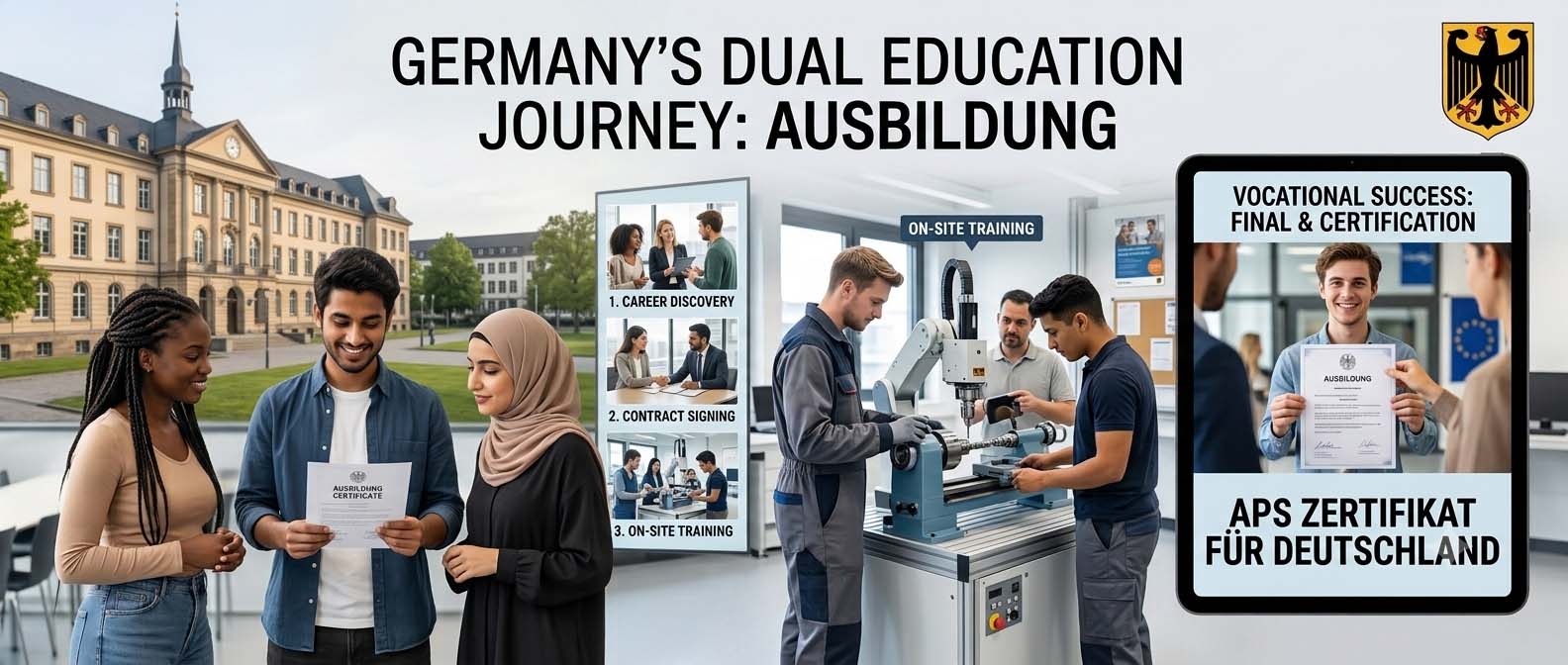
Germany has become one of the most attractive destinations for Indian students looking for quality education and rewarding career opportunities. While many students are familiar with Bachelor's and Master's degree programmes, another excellent pathway that is rapidly gaining popularity is Ausbildung in Germany.
An Ausbildung programme combines classroom learning with practical on-the-job training, allowing students to gain professional skills while earning a monthly salary. This unique vocational education system helps students become job-ready and provides a direct pathway into the German workforce.
For Indian students who want to build an international career without paying high university tuition fees, Ausbildung offers an excellent opportunity to receive practical training, improve German language skills and secure stable employment after graduation.
This comprehensive guide explains everything you need to know about Ausbildung in Germany, including eligibility, language requirements, application process, salary, visa, top courses, career opportunities and frequently asked questions.
The word Ausbildung means vocational training or apprenticeship in German. It is a structured education programme that combines theoretical learning at a vocational school with practical training at a company or employer.
Unlike traditional university education, students enrolled in an Ausbildung programme spend a significant amount of time working in a real company while also attending classes to learn the theoretical aspects of their profession.
This practical learning approach enables students to develop valuable workplace experience before completing their training.
Germany's vocational education system is internationally recognized for producing highly skilled professionals in industries such as healthcare, engineering, information technology, hospitality, logistics, manufacturing, retail and finance.
Every year thousands of international students choose Germany because of its excellent vocational education system, strong economy and high demand for skilled workers.
Some of the biggest advantages include:
For students who prefer practical learning instead of only classroom education, Ausbildung can be an ideal career path.
One of the unique features of Ausbildung is its combination of education and employment.
Students generally divide their time between:
This dual approach allows students to immediately apply what they learn in the classroom to real workplace situations.
During the programme, trainees receive guidance from experienced professionals while gradually developing the skills required for their chosen profession.
Dual Ausbildung is the most popular vocational training system in Germany.
Students spend part of the week working at a company and the remaining time attending vocational school.
This model allows trainees to earn a monthly training allowance while gaining practical experience.
Industries commonly offering Dual Ausbildung include:
Some professions require students to spend most of their training in specialized vocational schools before completing practical placements.
School-based Ausbildung is common in fields such as:
International students from India can apply for Ausbildung programmes if they meet the eligibility requirements established by employers, vocational schools and German immigration authorities.
Eligibility generally depends on:
Although requirements may vary depending on the employer and profession, many Ausbildung programmes expect applicants to satisfy the following conditions.
There is no single official age limit that applies to every Ausbildung programme. However, many employers tend to prefer younger applicants, often those in their late teens to mid-twenties. Older applicants may also be considered, especially if they have relevant education, work experience or strong motivation.
German language proficiency is one of the most important requirements for most Ausbildung programmes.
Many employers expect applicants to have at least a B1 level of German, while some professions—particularly in healthcare—may require B2 or higher. The exact requirement depends on the employer, training provider and occupation.
Unlike many university programmes, IELTS is generally not the primary language requirement for Ausbildung because most vocational training is conducted in German.
Instead of English language test scores, employers usually focus on your ability to communicate effectively in German during both training and day-to-day work.
Having strong German language skills can significantly improve your chances of receiving an Ausbildung offer.
While document requirements may vary depending on the employer and programme, applicants commonly need:
Applying for an Ausbildung programme requires careful planning. Starting your preparation several months before the intake can improve your chances of securing a training position.
Indian students accepted into an Ausbildung programme generally need to apply for the appropriate German national visa before travelling.
Depending on the current visa requirements, applicants may be asked to provide documents such as:
Always verify the latest visa requirements with the German diplomatic mission responsible for your application.
Most Ausbildung programmes last between 2 and 3.5 years, depending on the occupation and training structure.
The duration is determined by the profession, training regulations and in some cases the trainee's previous qualifications or performance.
Some trainees may complete their programme earlier if they meet the required standards and receive approval under the applicable rules.
Yes. One of the biggest advantages of Ausbildung is that trainees usually receive a monthly training allowance from their employer.
The exact amount varies depending on the profession, employer, collective agreements, region and year of training.
In many occupations, the monthly allowance increases each year as trainees gain more skills and responsibilities.
Training allowances vary significantly across different industries. The figures below are illustrative and can change over time.
| Training Year | Typical Monthly Range (Gross) |
|---|---|
| First Year | Approximately €700–€1,100 |
| Second Year | Approximately €800–€1,200 |
| Third Year | Approximately €900–€1,350 |
Actual payments depend on the occupation, employer and collective bargaining agreements.
After successfully completing vocational training, many graduates receive full-time employment offers from their training employer or other companies.
Starting salaries differ by profession, location, experience and employer.
Examples include:
With additional experience, certifications and language skills, salary growth opportunities can be substantial.
Germany offers hundreds of vocational training programmes. Some of the most popular choices among international students include:
Nursing continues to be one of the most sought-after Ausbildung programmes due to Germany's growing demand for healthcare professionals. Graduates often benefit from strong employment prospects and opportunities for long-term career development.
The technology sector offers vocational training in software development, system integration, technical support and network administration. As Germany's digital economy expands, skilled IT professionals remain in high demand.
Students interested in tourism, customer service and hospitality can pursue training in hotels, restaurants and event management, gaining practical experience while learning industry standards.
Many internationally recognised companies recruit trainees every year. Opportunities vary depending on the profession and recruitment cycle.
Applicants should check each company's official careers page for current vacancies and eligibility requirements.
Training opportunities are available across Germany, but some cities have particularly strong industrial and employment sectors.
When choosing a location, consider factors such as cost of living, accommodation availability, transport and employment opportunities in your chosen field.
Your monthly living expenses depend largely on the city you live in and your personal lifestyle.
Typical expenses may include:
Careful budgeting can help trainees manage their finances effectively during the programme.
Many trainees choose shared apartments because they are often more affordable than renting a private flat. Other accommodation options include student residences, employer-assisted housing where available and private rentals.
It is advisable to begin searching for accommodation as soon as you receive your training offer, especially in larger cities where demand can be high.
Health insurance is an essential requirement for anyone living and working in Germany, including students enrolled in an Ausbildung programme. Depending on your employment status and income, you may be covered through Germany's statutory health insurance system or another eligible health insurance provider.
Before travelling to Germany, ensure you understand the health insurance requirements that apply to your visa and training programme.
One of the biggest advantages of Germany's vocational education system is its strong connection with industry. Many trainees receive job offers from the same company where they completed their practical training.
After completing an Ausbildung, career opportunities may include:
Your long-term career prospects depend on factors such as your profession, language skills, work performance and the demand for skilled workers in your chosen field.
Many Indian students choose Ausbildung because it can provide a pathway to long-term employment in Germany.
After successfully completing vocational training, graduates who secure suitable employment may be eligible to apply for the appropriate residence permits under Germany's immigration laws. The specific options and eligibility requirements depend on the regulations in force at the time of application.
Students should always refer to the latest official immigration guidance before making long-term plans.
While Ausbildung offers many benefits, applicants should also be prepared for certain challenges.
With proper preparation and realistic expectations, these challenges can usually be managed successfully.
Many applicants delay or weaken their applications because of avoidable mistakes.
Taking time to prepare a professional application can significantly improve your chances of receiving an offer.
Ausbildung is Germany's vocational education and training system that combines classroom learning with practical work experience.
Yes. Indian students who meet the eligibility, language and visa requirements can apply for suitable Ausbildung programmes.
In most cases, German language proficiency is more important than IELTS because the training is usually conducted in German.
Many employers expect at least B1, while some professions such as healthcare may require B2. Requirements vary by employer and occupation.
Most programmes last between two and three and a half years.
Yes. Most trainees receive a monthly training allowance from their employer.
Yes. Many Ausbildung programmes accept applicants who have completed Class 12, although requirements vary by profession and employer.
Nursing, IT, hospitality, logistics, automotive technology, electronics, retail and industrial mechanics are among the popular options.
Not always. Many programmes accept applicants without prior work experience if they meet the educational and language requirements.
If you obtain suitable employment and meet the applicable immigration requirements, you may have options to remain in Germany. Always refer to current immigration rules.
Many Ausbildung programmes do not charge tuition in the same way as university degrees and trainees often receive a monthly allowance. However, living expenses and other personal costs still need to be considered.
The best city depends on your chosen profession, cost of living, employer opportunities and personal preferences. Large cities often offer more vacancies but may also have higher living costs.
Yes. Depending on your qualifications and the applicable admission requirements, further education opportunities may be available after completing an Ausbildung.
It is advisable to begin preparing several months before your preferred intake to allow enough time for language preparation, applications, interviews and visa processing.
Vacancies can be found on employer career pages, official German job portals, vocational training websites and through reputable education or recruitment agencies.
Ausbildung in Germany for Indian Students is an excellent option for those who want practical training, international work experience and strong career prospects. By combining classroom education with paid workplace training, Germany's vocational education system prepares students for real-world employment while helping them develop valuable professional and language skills.
Success begins with careful planning. Invest time in improving your German language skills, research your preferred profession thoroughly, prepare a strong application and stay informed about the latest visa and immigration requirements.
With dedication and the right preparation, an Ausbildung programme can become the foundation for a rewarding career and a successful future in Germany.
If you need assistance with choosing the right Ausbildung programme, improving your German language profile, preparing your CV and motivation letter, applying to employers, arranging documents or understanding the visa process, professional guidance can make your journey much smoother.
Start your preparation early, follow official requirements carefully and build a strong application to maximize your chances of receiving an Ausbildung offer.

 ▼
▼
 Deutsch
  Artikel Quiz
 German Grammar