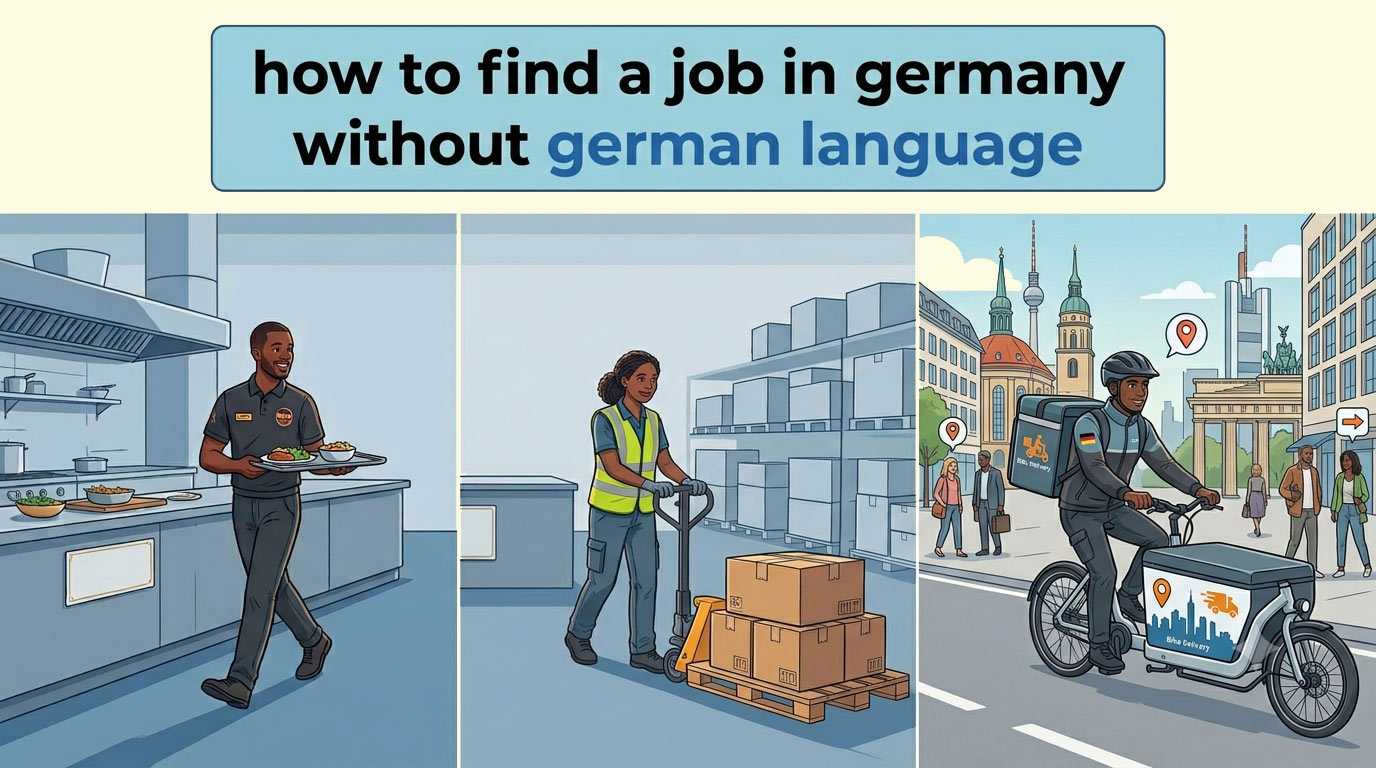
Germany continues to be one of the most attractive destinations for skilled professionals, graduates and international students looking to build a successful career in Europe. With one of the world's strongest economies and an increasing demand for qualified workers, thousands of international candidates search for employment opportunities in Germany every year. One question, however, appears repeatedly among job seekers: Can you find a job in Germany without speaking German?
The answer is yes, but it comes with certain limitations. While many multinational companies and technology firms operate entirely in English, the majority of German businesses still prefer employees who can communicate in German. This means that although English-speaking jobs exist, they represent only a portion of the overall job market. If your long-term goal is to establish a successful career in Germany, learning German can significantly improve your employment prospects, salary potential and professional growth.
In this guide, you'll learn where English-speaking opportunities are available, which industries hire international professionals, practical strategies to improve your chances of getting hired and why investing time in learning German is one of the smartest career decisions you can make.
Yes, it is entirely possible to secure employment in Germany without German language skills, particularly if you work in a highly skilled profession. Companies that operate internationally often use English as their primary business language, making them more open to hiring candidates from around the world. Technology companies, startups, research organisations, consulting firms and multinational corporations frequently recruit professionals based on their technical expertise rather than their German language proficiency.
However, this does not mean German is unimportant. The majority of businesses across Germany communicate with customers, suppliers and government authorities in German. Internal meetings, documentation, workplace safety instructions and day-to-day communication are also commonly conducted in German. As a result, candidates without German language skills compete for a much smaller number of vacancies than applicants who possess even intermediate-level German.
If you do not yet speak German, you should focus your job search on industries where English is already widely used. These sectors generally experience higher international recruitment and often value professional skills more than language ability. Although German remains an advantage, employers in these industries are usually comfortable working in multicultural environments.
Many of these employers regularly recruit international talent because specialised technical skills are often more difficult to find than English-speaking professionals. Nevertheless, employees who continue learning German generally integrate faster into the workplace and become eligible for a wider range of internal promotions.
While the technology sector offers numerous English-speaking opportunities, many professions require regular interaction with German-speaking customers, patients, students or public authorities. In these careers, German communication skills are considered essential rather than optional.
Even when employers are willing to hire international candidates, many of these positions require at least a B1 or B2 level of German because daily communication is critical to performing the job effectively.
Many international job seekers underestimate the importance of language when planning their careers in Germany. While Germany certainly faces a shortage of skilled workers, language remains one of the biggest deciding factors during recruitment. Employers naturally prefer candidates who can communicate confidently with colleagues and clients without requiring additional language support.
Although the exact impact varies by profession, not speaking German can realistically reduce your available job opportunities by approximately 70% to 90%. English-speaking vacancies are highly competitive because applicants from around the world apply for the same positions. On the other hand, candidates with B1 or B2 German gain access to thousands of additional roles across manufacturing, healthcare, education, logistics, hospitality, automotive companies, government contractors and countless small and medium-sized businesses.
Rather than viewing German as an obstacle, think of it as a career accelerator. Every level you achieve—from A1 to B2—expands your employment opportunities and makes your profile considerably more attractive to employers.
Although German is spoken throughout the country, certain cities have developed strong international business ecosystems where English is commonly used in the workplace. These cities attract multinational companies, global startups, research institutions and international investors, creating better opportunities for English-speaking professionals.
Berlin is especially popular among software developers, startup founders, designers and digital professionals, while cities like Munich and Frankfurt offer excellent opportunities in engineering, finance, automotive and technology sectors.
If you are currently applying for jobs without German language skills, you should focus on making every other part of your profile as competitive as possible. Employers hiring international candidates usually receive applications from professionals across the globe, so having an impressive CV, relevant work experience and strong technical skills becomes even more important. At the same time, demonstrating that you are actively learning German sends a positive message to recruiters because it shows commitment to integrating into German society and the workplace.
Improve your chances by preparing a professional German-style CV, writing a tailored cover letter for each application, building an active LinkedIn profile, earning industry-recognized certifications and networking with recruiters and professionals already working in Germany. Applying to multinational companies, international startups and businesses that use English as their primary working language can also increase your chances of securing interviews.
Using reliable job portals is one of the most effective ways to find English-speaking vacancies in Germany. Many employers advertise openings on multiple platforms, so creating profiles on several websites can help you discover more opportunities.
Rather than sending the same CV to hundreds of employers, customize your application according to each job description. Recruiters appreciate applicants who clearly demonstrate how their skills match the company's requirements.
Although it is possible to begin your career in Germany using English, learning German remains one of the most valuable investments you can make. Language skills do much more than help you find employment—they improve your everyday life, strengthen workplace relationships and increase your confidence during interviews, meetings and client interactions.
Employers also view German proficiency as a sign that you intend to build a long-term career in Germany. Candidates who can communicate with colleagues and customers in German often receive better promotion opportunities and greater responsibilities. Even moving from beginner level (A1) to intermediate level (B1 or B2) can unlock thousands of additional job opportunities that would otherwise remain inaccessible.
Beyond employment, German helps you manage daily life more comfortably. Whether you are visiting government offices, renting accommodation, attending medical appointments, shopping or making new friends, understanding the language makes living in Germany significantly easier and more enjoyable.
International students often have better opportunities to begin working in Germany because universities provide access to internships, campus employment, career fairs and networking events. Many students successfully find part-time jobs in warehouses, restaurants, delivery services, research projects, universities and multinational companies where English is sufficient.
However, after graduation, the competition for full-time professional roles becomes much stronger. Students who graduate with both a recognized German degree and B1 or B2 German language skills usually have a clear advantage over those relying only on English. Learning German while studying is therefore one of the smartest ways to prepare for long-term career success.
If your goal is to build a successful career in Germany, don't wait until after receiving a job offer to begin learning German. Starting early gives you a competitive advantage and demonstrates commitment to potential employers. Even learning a few new words every day can lead to significant progress over time.
At GermanToEnglish.de, you can improve your vocabulary, grammar, pronunciation and everyday communication skills through beginner-friendly learning resources, vocabulary categories and practical examples designed specifically for learners preparing to study, work or live in Germany. Consistent practice today can create many more career opportunities tomorrow.
Yes. Many multinational companies, IT firms, startups and research organisations hire English-speaking professionals. However, these opportunities are more competitive than jobs requiring German.
Software development, engineering, artificial intelligence, data science, research, biotechnology, finance and international business are among the best industries for English-speaking professionals.
No. However, most customer-facing, healthcare, education, retail, hospitality and government-related jobs require German language skills.
Reaching B1 or B2 is recommended for most professional careers because it significantly increases the number of available job opportunities and improves communication in the workplace.
Finding a job in Germany without German language skills is certainly achievable, particularly if you have expertise in technology, engineering, research or other high-demand professions. Nevertheless, English-speaking positions represent only a small portion of Germany's overall employment market and competition for these roles is often intense. Learning German is one of the most effective ways to expand your career options, improve your earning potential and integrate successfully into both professional and everyday life.
If you are serious about working in Germany, make language learning an essential part of your career plan rather than an afterthought. By combining strong professional skills with consistent German language practice, you will position yourself for far greater success in one of Europe's most dynamic job markets. Explore the free learning resources available on GermanToEnglish.de to strengthen your German skills and take one step closer to achieving your career goals in Germany.

 ▼
▼
 Deutsch
  Artikel Quiz
 German Grammar