German Numbers – Learn Counting & Usage
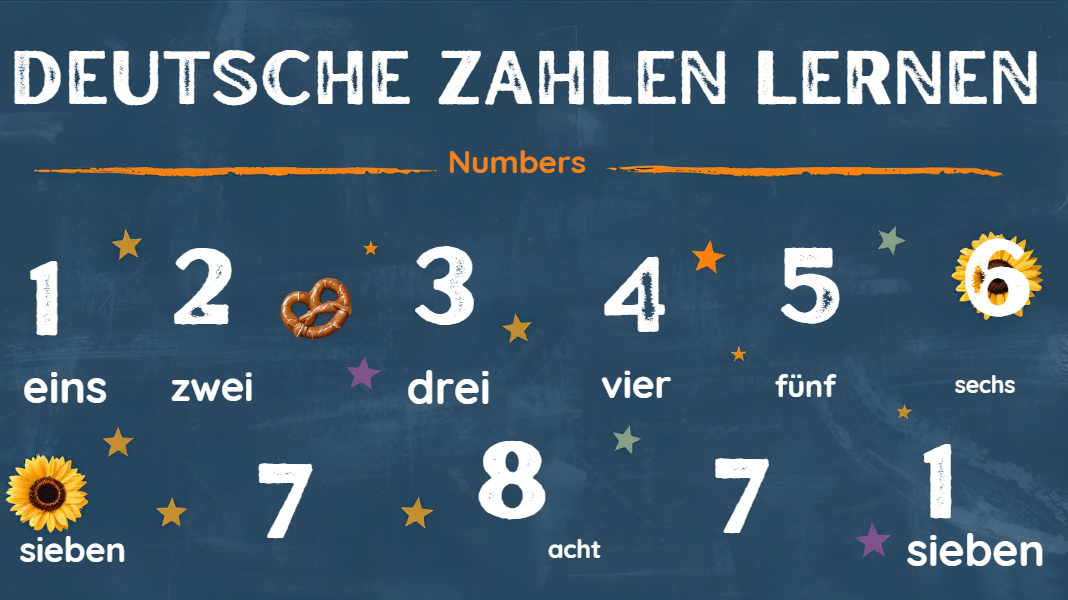
Learning German numbers is essential for everyday communication, including counting, telling time, giving dates, shopping and using phone numbers. This page explains how to read, write and use German numbers correctly.
1. Cardinal Numbers (Grundzahlen)
Cardinal numbers are used for counting or indicating quantity.
- 0 – null
- 1 – eins
- 2 – zwei
- 3 – drei
- 4 – vier
- 5 – fünf
- 6 – sechs
- 7 – sieben
- 8 – acht
- 9 – neun
- 10 – zehn
For numbers 11–19, add the suffix “-zehn”: 11 – elf, 12 – zwölf, 13 – dreizehn, … 19 – neunzehn.
Tens are: 20 – zwanzig, 30 – dreißig, 40 – vierzig, 50 – fünfzig, 60 – sechzig, 70 – siebzig, 80 – achtzig, 90 – neunzig, 100 – hundert, 1000 – tausend.
---
2. Forming Compound Numbers
Numbers 21–99 are formed by placing the unit first, then 'und', then tens:
- 21 – einundzwanzig
- 32 – zweiunddreißig
- 47 – siebenundvierzig
- 99 – neunundneunzig
---
3. Ordinal Numbers (Ordnungszahlen)
Ordinal numbers indicate position or order. They are formed by adding -te (1–19) or -ste (20+):
- 1st – erste
- 2nd – zweite
- 3rd – dritte
- 10th – zehnte
- 21st – einundzwanzigste
- 100th – hundertste
Example sentence: *Er ist der dritte Schüler in der Reihe.* → He is the third student in line.
---
4. Using Numbers in Dates, Time and Money
- Dates: 12. Mai 2025 → zwölfter Mai zweitausendfünfundzwanzig
- Time: 14:30 → vierzehn Uhr dreißig
- Money: 25,50 € → fünfundzwanzig Euro fünfzig
---
5. Tips for Learning Numbers
- Practice counting aloud to remember pronunciation.
- Write dates, prices and phone numbers in German regularly.
- Use ordinal numbers in context (first, second, third) to memorize endings.
- Learn compound numbers gradually (21–99) using the “unit + und + tens” rule.
---
6. Common Mistakes to Avoid
- Mixing units and tens order — remember German says “einundzwanzig” (21), not “zwanzigeins”.
- Incorrect endings for ordinal numbers — always use -te or -ste correctly.
- Forgetting that numbers in addresses, dates and money can differ from English structure.
---
Learn, Translate & Move with Confidence
At germantoenglish.de, you can:
- Learn German grammar and numbers step by step
- Translate words and examples instantly
- Understand real-life sentences and usage
- Prepare for A1 to B2 exams with clarity
Summary
Mastering German numbers, both cardinal and ordinal, is crucial for daily life, travel and study. Practice counting, forming compound numbers and using them in dates, time and money for fluency.

 ▼
▼
 Deutsch
  Artikel Quiz
 German Grammar