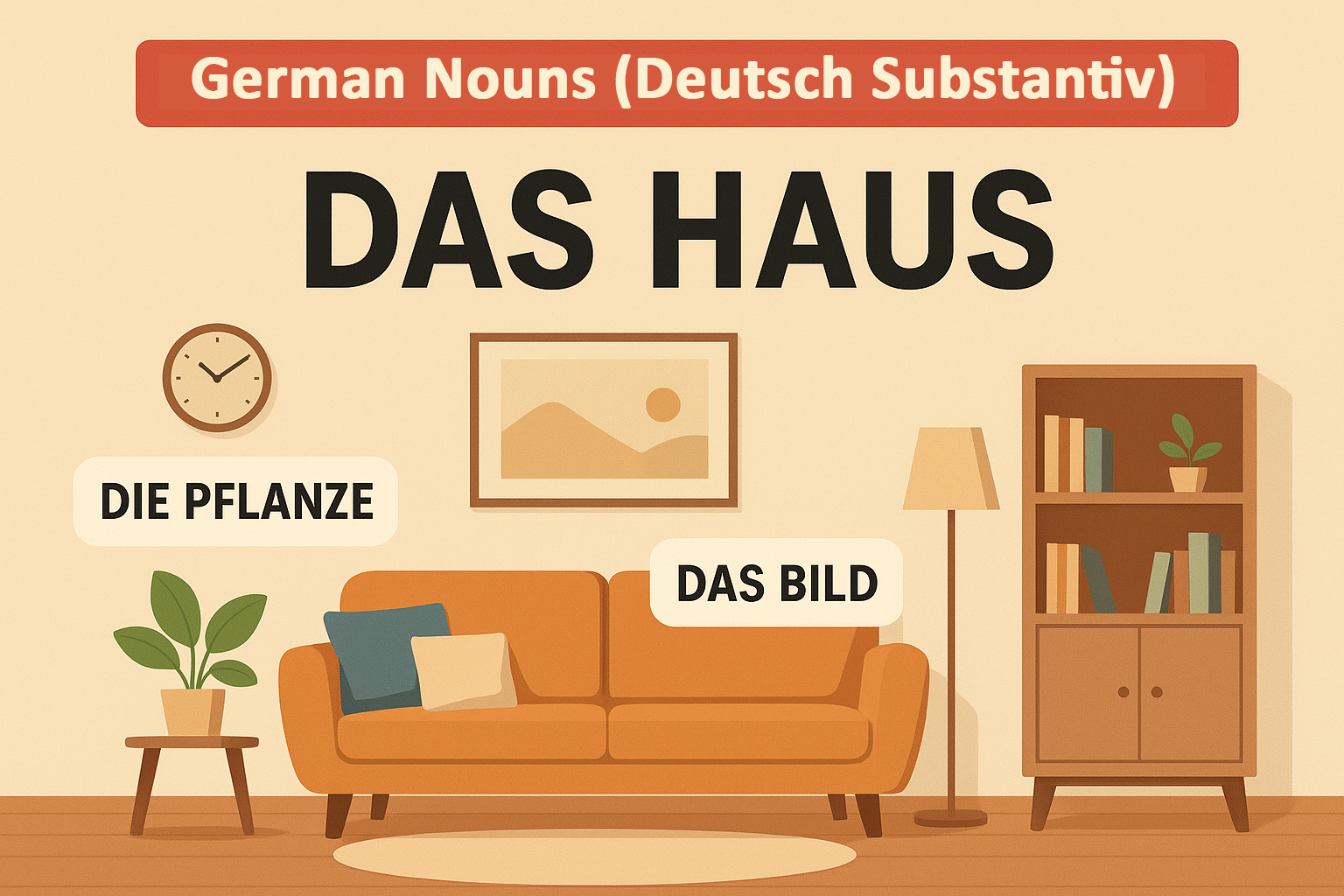
German nouns are one of the most important parts of the language. Every noun in German starts with a capital letter and has a specific gender (masculine, feminine or neuter). Understanding German noun genders and articles like der, die and das is key to speaking correctly and confidently.
A noun (in German: das Nomen or das Substantiv) names a person, place, thing or idea. For example:
Notice that each noun begins with a capital letter and includes an article (der, die, das).
German nouns have three grammatical genders:
There are some patterns that help identify gender:
Unlike English, there’s no single rule for forming plurals in German. Here are a few examples:
Each plural form must be learned with the noun. It’s good practice to memorize nouns along with their article and plural, e.g. der Tisch, die Tische.
| German Noun | Article | Plural | English Meaning |
|---|---|---|---|
| der Tag | der | die Tage | day |
| die Schule | die | die Schulen | school |
| das Auto | das | die Autos | car |
| der Freund | der | die Freunde | friend |
| die Sprache | die | die Sprachen | language |
German nouns form the backbone of your vocabulary. By learning each noun with its article and plural, you’ll quickly develop a stronger understanding of sentence structure and grammar. Keep practicing daily and you’ll soon feel confident reading, writing and speaking German!

 ▼
▼
 Deutsch
  Artikel Quiz
 German Grammar