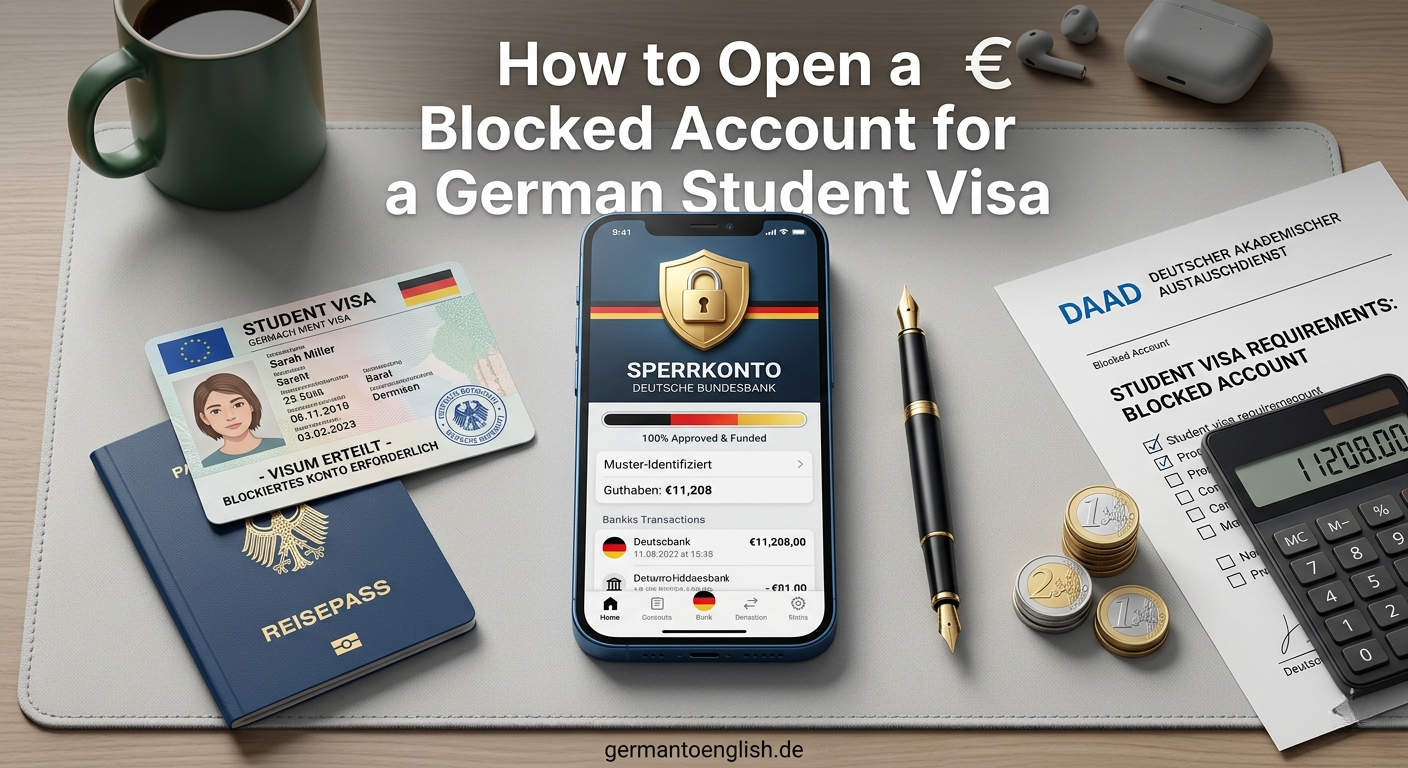
If you are planning to study in Germany, one of the most important requirements for obtaining a German student visa is proving that you have sufficient financial resources to support yourself during your stay. For most international students, the most common way to provide this proof is through a blocked account, known in German as a Sperrkonto.
Many students first hear about a blocked account when preparing their visa application and are often confused about how it works, how much money must be deposited and how they can access their funds after arriving in Germany. While the process may seem complicated initially, opening a blocked account has become relatively straightforward thanks to several specialized providers that allow students to complete most of the process online.
This guide explains everything international students need to know about opening a blocked account for a German student visa, including eligibility requirements, required documents, step-by-step instructions, costs, common mistakes and frequently asked questions.
A blocked account is a special type of bank account designed for international students and certain visa applicants who need to demonstrate financial stability before moving to Germany.
Unlike a regular bank account, the money deposited into a blocked account cannot be withdrawn freely all at once. Instead, the funds remain "blocked," and the account holder can only access a limited amount each month after arriving in Germany.
The German government uses this system to ensure that international students have enough money to cover their living expenses throughout their stay and do not become financially dependent on public assistance.
For most student visa applicants, the blocked account serves as official proof that they can support themselves while studying in Germany.
Germany wants to ensure that international students can pay for accommodation, food, transportation, health insurance, study materials and other daily expenses without experiencing financial difficulties.
Because tuition fees at many German public universities are very low or even free, living expenses usually represent the largest financial challenge for students.
A blocked account demonstrates to German immigration authorities that the applicant has sufficient funds available for their stay.
Without acceptable proof of financial resources, a student visa application may be rejected.
Not every student needs a blocked account, but it is required for many international students from non-EU and non-EEA countries.
A blocked account is commonly required for:
The specific requirements can vary depending on your nationality and the German embassy or consulate handling your application.
Students should always verify current requirements with the responsible German diplomatic mission before submitting their application.
The required blocked account amount is adjusted periodically by German authorities to reflect living costs.
The exact amount required for your application should always be verified through official sources before transferring funds.
Generally, the required amount is calculated based on estimated monthly living expenses multiplied by twelve months.
Once the funds have been deposited into the blocked account, the account holder can usually access only a fixed monthly amount after arriving in Germany.
This monthly withdrawal limit is designed to help students manage their finances throughout the year.
The process is relatively simple.
First, the student opens a blocked account through an approved provider. After the account is created, the required amount is transferred into the account.
The provider then issues a confirmation document showing that the account has been funded according to German visa requirements.
This confirmation document is submitted as part of the student visa application.
After arriving in Germany and completing the necessary activation procedures, the student gains access to monthly withdrawals from the account.
The remainder of the funds stays blocked and becomes available gradually over time.
Several financial service providers offer blocked accounts specifically for international students.
Students often compare providers based on:
Before choosing a provider, carefully compare fees, requirements and processing times.
Because regulations and provider offerings may change, students should always review the latest information directly from the provider before applying.
The exact documentation requirements vary depending on the provider, but most students are asked to submit:
Some providers may request additional information depending on the applicant's nationality or visa category.
The first step is selecting a provider that meets your needs.
When comparing providers, consider:
Students should begin the process well in advance because visa appointments often require proof that the account has already been funded.
Most providers now allow students to complete the application process online.
Applicants usually create an account, enter personal information, upload required documents and complete identity verification.
It is important to ensure that all information matches the passport and visa application documents exactly.
Even small inconsistencies can sometimes delay processing.
Identity verification is an important part of the process.
Depending on the provider, verification may be completed through:
Applicants should carefully follow the provider's instructions to avoid delays.
After the account is approved, the provider will supply banking details for the transfer.
The student must transfer the required amount into the blocked account.
International transfers can take several business days depending on the sending bank and country.
Students should keep transfer receipts and transaction records for reference.
Some banks may charge additional transfer fees, which should be considered when calculating the total amount to send.
Once the funds arrive and the account has been properly funded, the provider issues a confirmation certificate.
This document confirms that the blocked account satisfies German visa requirements.
The confirmation certificate is typically submitted with the student visa application.
Many embassies and consulates specifically request this document during the application process.
After obtaining the blocked account confirmation, students can proceed with their visa application.
Additional documents often include:
Requirements may vary depending on the country where the visa application is submitted.
After arriving in Germany, students usually need to complete additional steps before accessing their monthly funds.
These may include:
Once activation is complete, monthly transfers can begin according to the provider's procedures.
The purpose of the blocked account is to distribute funds throughout the year.
As a result, students generally cannot withdraw the entire balance immediately.
Instead, a predetermined monthly amount becomes available.
This amount is based on the financial requirements established by German authorities.
The exact monthly limit depends on current regulations and the total amount deposited.
Many students encounter avoidable delays because they underestimate the preparation required.
Some common mistakes include:
Starting the process several months before your planned travel date can help reduce stress and prevent complications.
In some situations, applicants may be able to demonstrate financial resources through alternative methods.
Possible alternatives may include:
However, eligibility for alternatives depends on the specific visa category and embassy requirements.
Students should verify acceptable options before relying on alternatives.
No. The account is specifically designed to limit access to a fixed monthly amount.
Yes. Monthly withdrawals are intended to cover living expenses, including accommodation, food, transportation and daily needs.
Processing times vary depending on the provider, identity verification procedures and international transfer speed.
Most providers offer procedures for closing the account and recovering funds if a visa application is denied, although fees may apply.
Always review the provider's refund policy before opening the account.
Opening a blocked account is one of the most important steps in the German student visa process. Although the procedure may initially seem intimidating, most students successfully complete it by following the required steps and preparing their documentation in advance.
A blocked account demonstrates financial stability, satisfies visa requirements and helps ensure that students have access to sufficient funds during their studies in Germany.
By selecting a reliable provider, submitting accurate documents, funding the account correctly and allowing enough time for processing, students can avoid many common problems and focus on preparing for their academic journey.
Germany continues to attract students from around the world because of its high-quality education system, affordable public universities and strong career opportunities. Understanding how the blocked account system works is an important part of successfully beginning that journey.

 ▼
▼
 Deutsch
  Artikel Quiz
 German Grammar