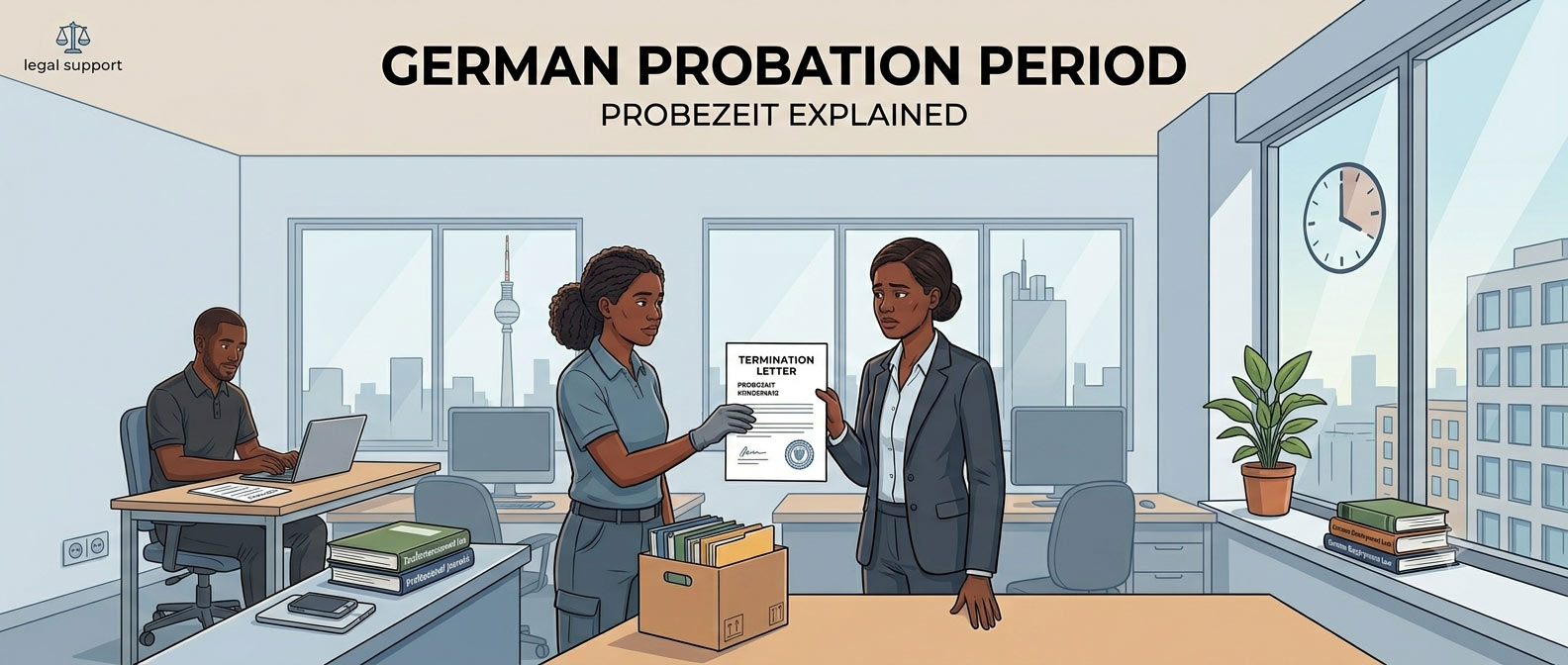
Starting a new job in Germany is an exciting milestone, whether you have moved as an international professional, graduated from a German university or received a work visa from abroad. Along with adapting to a new workplace, many employees encounter an important concept in German employment contracts known as the Probation Period or Probezeit in German. Understanding how this period works is essential because it determines the initial employment conditions, notice period and the expectations placed on both the employer and the employee.
Many international workers worry that being on probation means they have very few rights or that they can be dismissed at any moment without reason. While German labour law does allow employers greater flexibility during the probation period, employees are still protected by employment contracts, workplace regulations and several legal provisions. Knowing your rights and responsibilities can help you perform confidently while avoiding unnecessary misunderstandings.
This guide explains everything you need to know about the probation period in Germany, including how long it lasts, employee rights, notice periods, annual leave, sick leave, termination rules and practical advice for successfully completing your probation.
The probation period, known as Probezeit, is the initial phase of employment during which both the employer and employee evaluate whether the working relationship is a good fit. Employers assess your professional skills, reliability, communication and ability to integrate into the team, while employees can determine whether the role, company culture, working conditions and career prospects meet their expectations.
Unlike some countries where probation is informal, Germany usually includes the probation period as a written clause in the employment contract. During this time, employment rules differ slightly from those that apply after probation, particularly regarding the notice period for ending the employment relationship.
For most employees, the probation period lasts up to six months. This is the maximum duration commonly permitted under German employment law, although employers may choose a shorter probation period or decide not to include one at all. In practice, six months is by far the most common arrangement for permanent full-time positions.
Some temporary, seasonal or fixed-term contracts may have shorter probation periods depending on the duration of employment. Always check your employment contract carefully, as the agreed probation period must be clearly stated before you begin work.
Recruiting and training a new employee requires significant time and financial investment. The probation period allows employers to verify that the person they hired has the necessary technical skills, professionalism and ability to work effectively within the organisation. It also provides an opportunity to assess punctuality, communication, teamwork, adaptability and overall performance before making a long-term commitment.
From the employee's perspective, probation offers valuable time to understand company expectations, evaluate the working environment and decide whether the position aligns with long-term career goals. If either party feels the employment relationship is unsuitable, ending the contract is generally simpler during this period than after probation has been successfully completed.
Yes. One of the most significant differences during the probation period is that employers have greater flexibility to terminate employment if they believe the employee is not suitable for the role. Likewise, employees are free to resign if they find that the position does not meet their expectations.
However, this does not mean employers can dismiss employees unfairly or discriminate against them. German employment law continues to prohibit discrimination based on nationality, race, religion, gender, disability, age or other protected characteristics. Employers must also follow the notice period agreed upon in the employment contract or required by law.
One of the biggest advantages of the probation period is the shorter notice requirement. In most employment contracts, either the employer or employee can terminate the employment relationship by giving two weeks' notice during probation. This allows both parties to make decisions quickly if the employment arrangement is not working as expected.
After the probation period ends, the standard notice period usually becomes longer according to the employment contract or German labour law. Employees should therefore understand exactly when their probation period finishes and what notice rules apply afterward.
Yes. In most cases, employees receive the same salary during probation that is stated in their employment contract. The probation period is not considered a training period or unpaid trial. You remain a regular employee with agreed working hours, salary and contractual benefits unless specific conditions are clearly mentioned in your employment agreement.
Some employers may schedule a salary review after probation, but this depends entirely on the company and the employment contract. Always discuss salary progression before accepting an offer rather than assuming an automatic increase after six months.
Yes. Employees are entitled to take sick leave if they become ill during probation. If your illness prevents you from working, you should inform your employer immediately and provide a medical certificate when required. Being genuinely sick should not prevent you from using your legal entitlement to medical leave.
That said, maintaining clear communication and following company procedures is especially important during probation. Frequent unexplained absences or failure to report illness correctly may negatively affect your overall evaluation.
Many employees believe they cannot take holidays during their probation period, but this is a common misconception. In Germany, employees begin earning their annual leave entitlement from their first day of employment. However, the ability to take leave depends on company policy, operational requirements and approval from the employer.
Under the German Federal Vacation Act, employees generally receive their full statutory annual leave entitlement after completing six months of employment. Nevertheless, leave is accrued proportionally from the beginning of the employment relationship. For example, if your contract provides 24 days of annual leave per year, you earn approximately two days of leave for every completed month of work. Many employers approve short vacations during probation if they are planned well in advance and do not disrupt business operations.
Yes. Employees on probation enjoy the same entitlement to public holidays as permanent employees. If a public holiday falls on a normal working day, you are generally not required to work unless your profession or industry operates during holidays. Employees continue receiving their normal salary for official public holidays in accordance with German labour regulations.
Public holidays vary between Germany's federal states, so the exact number of holidays depends on where you are employed. This means an employee working in Bavaria may receive more public holidays than someone employed in another state.
Whether you are on probation or not, overtime rules are determined primarily by your employment contract, collective bargaining agreements or company policies. During the probation period, employers may occasionally ask employees to work additional hours to meet business demands, complete projects or assist colleagues. However, overtime should generally remain reasonable and comply with German working time regulations.
If overtime is expected regularly, employees should clarify whether additional hours are compensated through extra pay, time off in lieu or included within their salary package. Understanding these conditions early helps avoid misunderstandings later.
The probation period is your opportunity to demonstrate not only your professional knowledge but also your reliability, attitude and willingness to become part of the organisation. Employers often evaluate much more than technical ability. Teamwork, communication, punctuality, problem-solving and adaptability all influence the final assessment.
One of the best ways to succeed is to arrive on time, communicate professionally, ask questions when necessary, complete assigned tasks carefully and show initiative without overconfidence. Accept constructive feedback positively and use it to improve your performance. Building good relationships with colleagues and supervisors also creates a positive impression during your first few months.
For international employees, learning basic German can make an enormous difference. Even if English is the primary workplace language, making an effort to speak German demonstrates commitment to integrating into the company and local culture.
Many international professionals struggle during probation not because of technical skills but because of avoidable workplace mistakes. Understanding German work culture helps create a positive first impression and improves long-term career prospects.
Employers generally appreciate employees who communicate openly, learn quickly and show a genuine willingness to improve. Small professional habits often leave a stronger impression than technical expertise alone.
Although many international professionals begin their careers in English-speaking environments, learning German becomes increasingly valuable as they progress. Employees who communicate confidently in German often receive greater responsibilities, interact directly with customers, participate more actively in meetings and become eligible for promotions that may not be available to English-only speakers.
German language skills also improve everyday life outside the workplace. Whether dealing with government offices, landlords, healthcare providers, banks or neighbours, speaking German reduces stress and helps you integrate into German society more quickly. For professionals planning a long-term future in Germany, learning the language is one of the most valuable investments they can make.
In most employment contracts, the probation period lasts up to six months. Some employers choose a shorter duration depending on the position or contract type.
Yes. Employees may resign during the probation period, usually by giving two weeks' notice unless a different notice period is stated in the employment contract.
Yes. Employers may terminate employment more easily during probation, provided they follow the agreed notice period and comply with applicable employment laws.
Yes. Employees generally receive the salary specified in their employment contract from the first day of work, including during the probation period.
Yes. Annual leave begins accruing from your first day of employment, although taking leave usually requires employer approval and depends on company policy.
The probation period in Germany or Probezeit, is designed to help both employers and employees determine whether a new working relationship is the right fit. While employers have greater flexibility during this period, employees continue to enjoy important rights relating to salary, holidays, sick leave, workplace safety and fair treatment. Understanding these rules allows international professionals to approach their new role with confidence and avoid common misunderstandings.
If you are planning to work in Germany, preparing for your probation period goes beyond understanding employment law. Developing professional skills, adapting to German workplace culture and improving your German language ability can significantly increase your chances of successfully completing probation and building a long-term career. To strengthen your vocabulary and communication skills, explore the free learning resources available on GermanToEnglish.de, where you'll find practical German lessons designed for students, professionals and future immigrants preparing for life and work in Germany.

 ▼
▼
 Deutsch
  Artikel Quiz
 German Grammar