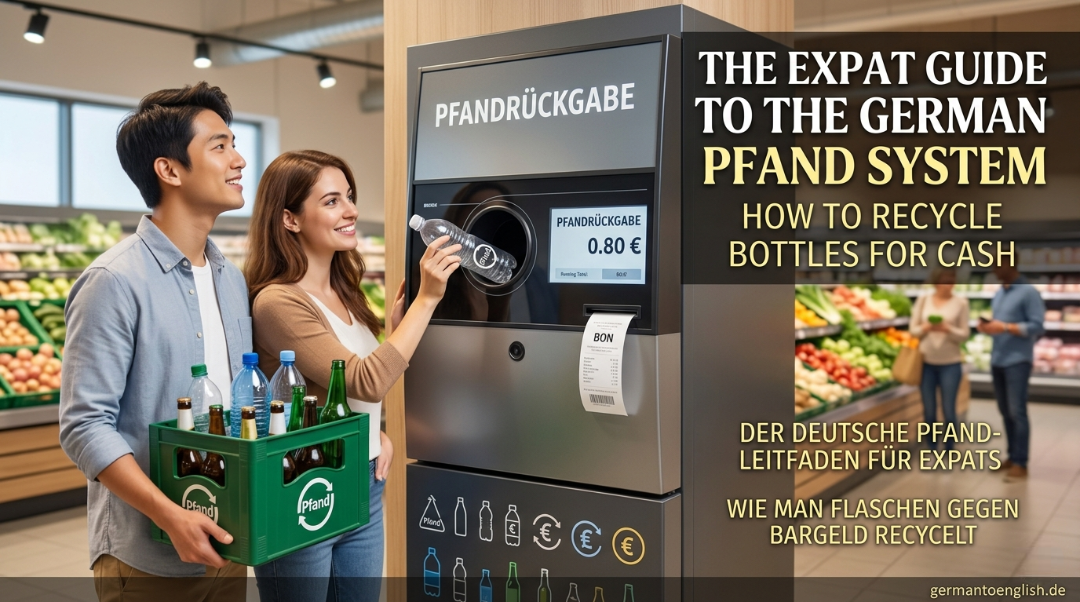
One of the first surprising things many immigrants, international students, tourists and expats notice after moving to Germany is that people do not simply throw plastic bottles and cans into the trash. Instead, many Germans carefully collect empty bottles, return them to supermarkets and receive money back through a system known as Pfand.
For newcomers, this can initially feel confusing. Many foreigners wonder why people are carrying empty bottles back to stores or why special recycling machines exist inside supermarkets. Some immigrants even accidentally throw away refundable bottles during their first weeks in Germany without realizing they are losing money.
The German Pfand system is one of the most well-known recycling systems in Europe and plays a major role in Germany’s environmental culture. It encourages recycling by attaching a refundable deposit to many beverage containers. Once the empty bottle or can is returned, the customer receives part of the money back.
Understanding how Pfand works is an important part of daily life in Germany because almost everyone uses the system regularly. For expats and immigrants, learning the Pfand process also helps them understand German recycling culture, sustainability habits and the country’s organized approach toward waste management.
The word Pfand in German basically means “deposit.” In Germany, many bottles and cans include an extra deposit fee when purchased. This deposit is refunded later when the empty container is returned to a recycling machine or collection point.
The system was designed to reduce litter, increase recycling rates and encourage people to return reusable or recyclable containers instead of throwing them away carelessly.
When buying drinks in Germany, customers usually pay two separate amounts:
After finishing the drink, the empty bottle or can can be returned to a supermarket or recycling station. The machine scans the container and provides a refund voucher that can be used at the checkout counter.
This system may initially feel unusual for foreigners, but after some time, most people become completely accustomed to it.
Germany is internationally known for its strong recycling culture and environmental awareness. The Pfand system exists because the country places major importance on sustainability and waste reduction.
Instead of depending only on traditional garbage collection, Germany encourages consumers to actively participate in recycling through financial motivation.
The idea is simple: people are much less likely to throw bottles into public spaces or regular trash bins if those bottles still have monetary value attached to them.
This approach has been highly successful. Germany now has one of the highest recycling rates in the world and the Pfand system plays an important role in that success.
Many immigrants are surprised by how seriously recycling is taken in Germany. Waste separation, recycling categories and environmental responsibility are deeply integrated into daily life.
The deposit amount depends on the type of bottle or container.
In most cases, refundable bottles and cans include deposits such as:
For newcomers, these extra charges may initially seem confusing during shopping because the final checkout amount becomes higher than expected.
However, this money is not lost. It is returned once the containers are recycled properly.
Over time, many expats become more conscious about collecting bottles because the refunds slowly add up, especially for students or people trying to save money.
One important thing immigrants need to learn is how to recognize refundable containers.
Most refundable bottles and cans include a Pfand logo or recycling symbol printed on the label. In supermarkets, receipts may also display the deposit amount separately.
Common refundable containers include:
Not every bottle in Germany has Pfand. Some containers are non-refundable and belong in regular recycling bins instead.
Many newcomers accidentally throw away refundable bottles during their first weeks because they do not recognize the symbols properly.
Most supermarkets in Germany have automated bottle return machines called Pfandautomaten. These machines are usually located near the entrance or outside the supermarket.
Using the machine is generally simple:
The receipt can then be used during checkout like cash.
For immigrants and tourists, the machines often feel surprisingly advanced compared to recycling systems in many other countries.
Some machines even reject damaged bottles, crushed cans or containers without readable labels, which sometimes frustrates newcomers initially.
Many foreigners notice another interesting aspect of German culture related to Pfand: some people collect bottles from public places.
Because refundable bottles have monetary value, people sometimes gather empty containers from parks, train stations, festivals or public trash areas to redeem them for cash.
This is especially common among:
In larger German cities, some people even place empty Pfand bottles beside public trash bins instead of throwing them inside. This allows collectors to take the bottles easily without searching through garbage.
Many immigrants initially find this behavior surprising, but it reflects how deeply the Pfand system has become integrated into German society.
Almost every immigrant or expat makes Pfand-related mistakes during their first months in Germany.
Common mistakes include:
Some supermarkets only accept bottles they sell themselves, especially smaller shops. Larger supermarkets usually accept a wider range of containers.
Many newcomers also forget how quickly Pfand money adds up over time.
For example, returning multiple bottles regularly can easily save a noticeable amount each month for students or budget-conscious expats.
For Germans, the Pfand system is not only about money. It also represents responsibility, environmental awareness and organized waste management.
Germany strongly encourages people to separate waste properly and recycle efficiently. Many immigrants quickly realize that recycling culture in Germany is much stricter and more structured than in many other countries.
People often separate:
The Pfand system fits naturally into this broader recycling culture.
For foreigners, adapting to these systems can initially feel complicated, but many people later appreciate the environmental benefits and organized structure.
Many expats describe the German Pfand system as one of the small cultural experiences that makes Germany feel different from home.
Some newcomers are impressed by how seriously environmental responsibility is treated. Others initially feel confused by the extra shopping steps and recycling rules.
Over time, however, most immigrants adapt quickly and begin participating naturally in the system.
Many foreigners even develop new recycling habits because of their experience in Germany.
The Pfand system also teaches an important cultural lesson about German society: systems are designed not only for convenience but also for long-term social and environmental responsibility.
If you are new to Germany, these simple tips can make handling Pfand much easier:
Once you become familiar with the system, returning bottles becomes a very normal part of weekly shopping routines.
The German Pfand system is one of the most unique and practical aspects of daily life in Germany. For many immigrants, expats, students and tourists, it becomes an early introduction to German recycling culture and environmental awareness.
At first, the system may feel confusing or unnecessary, especially for people coming from countries without bottle deposit programs. However, after understanding how it works, many foreigners appreciate the logic behind it.
The Pfand system encourages recycling, reduces waste, supports environmental responsibility and even helps people recover small amounts of money through everyday habits.
More importantly, it reflects something deeper about German society: organization, sustainability, efficiency and long-term thinking are often built directly into daily life.
For anyone moving to Germany, learning the Pfand system is not just about recycling bottles for cash. It is also about understanding an important cultural habit that shapes everyday life across the country.

 ▼
▼
 Deutsch
  Artikel Quiz
 German Grammar