 ▼
▼
 Deutsch
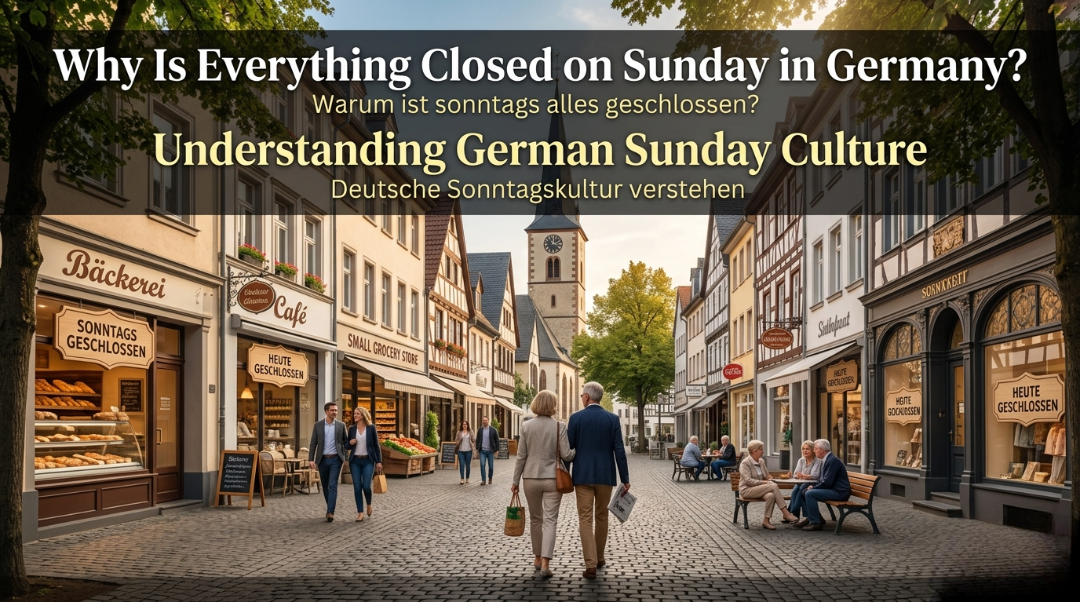
One of the biggest surprises many immigrants, tourists and international students experience after moving to Germany is the quietness of Sundays. Streets suddenly become calmer, shopping centers remain shut, supermarkets close their doors and many businesses stop operating completely. For people coming from countries where markets stay open every day, this feels unusual and sometimes even shocking during the first few weeks in Germany.
Many newcomers ask the same question almost immediately after arriving: Why is everything closed on Sunday in Germany?
The answer is deeply connected to German culture, history, work-life balance, religious traditions and legal regulations. Sundays in Germany are viewed differently compared to many other countries. Instead of being treated as a normal shopping or working day, Sunday is traditionally considered a day for rest, family time, relaxation and peace.
For some immigrants, this system initially feels inconvenient and frustrating. Others slowly begin appreciating the calm atmosphere and balanced lifestyle that Sundays create in Germany.
Understanding why Germany follows this tradition helps foreigners adapt better to everyday life and understand an important part of German culture.
Many people moving to Germany experience what can almost be called a “Sunday shock.” During the first few weekends, newcomers often realize too late that supermarkets and most stores are completely closed.
A common situation happens like this: someone plans to buy groceries, household items or daily necessities on Sunday afternoon, only to discover empty shopping streets and locked supermarket doors.
For immigrants coming from countries where shops operate seven days a week, this can feel highly inconvenient at first. In many parts of the world, Sundays are busy shopping days filled with crowds, restaurants, markets and commercial activity. Germany follows a very different approach.
Many newcomers quickly learn an important survival lesson in Germany: always finish grocery shopping before Sunday arrives.
The main reason shops remain closed on Sundays in Germany is because of laws designed to protect workers and preserve Sunday as a national day of rest.
Germany has regulations known as Ladenschlussgesetz or shop closing laws, which historically limited store opening hours. Although some rules have become more flexible over time depending on the federal state, Sundays remain highly protected.
The idea behind these laws is not simply about business restrictions. It reflects deeper cultural values in German society.
Sunday is traditionally seen as a day for:
Many Germans believe workers should have guaranteed free time instead of constantly working long hours throughout the week.
This concept is strongly connected to Germany’s emphasis on work-life balance and employee rights.
The tradition of quiet Sundays in Germany has historical and religious roots. Christianity historically played a major role in shaping European societies, including Germany.
Sunday was traditionally considered a holy day dedicated to church visits, family gatherings and rest. Over time, even as Germany became more modern and secular, many Sunday traditions remained deeply integrated into society.
Today, not every German person follows religious traditions actively, but the cultural importance of Sundays still exists strongly.
For many people, Sunday represents something beyond religion. It symbolizes personal time, peace and a temporary pause from busy modern life.
This is one reason why Germany still protects Sundays legally more than many other countries.
Another important reason behind Sunday closures is Germany’s strong focus on work-life balance.
Compared to some countries where nonstop work culture is common, Germany generally values personal time more seriously. Many Germans believe people should not spend every day working, shopping or dealing with commercial pressure.
Employees in Germany often receive:
The idea is that rest improves mental health, family life, productivity and overall quality of life.
For immigrants coming from highly work-driven cultures, this system may initially feel restrictive. However, after living in Germany longer, many foreigners begin appreciating the slower pace and protected personal time.
On Sundays, most businesses and commercial activities remain closed across Germany. This includes:
German cities often become significantly quieter compared to weekdays or Saturdays. Streets may feel calmer and commercial areas appear less crowded.
For people unfamiliar with this culture, German Sundays can initially feel almost too quiet.
Although many businesses close, some services still operate on Sundays because they are considered essential or connected to travel and tourism.
Places that may remain open include:
Tourist areas may also have slightly more flexible rules depending on local regulations.
Still, compared to many countries, commercial activity remains much lower on Sundays in Germany.
One interesting aspect immigrants notice is the overall atmosphere on Sundays.
The pace of life changes visibly. Public spaces become calmer, apartment buildings become quieter and families spend more private time together. Parks, lakes and walking areas may become more active because people focus on leisure rather than shopping.
Many Germans use Sundays for:
For immigrants from louder and more socially active cultures, this quietness can feel emotionally strange at first. Some people even describe German Sundays as “too silent” during their initial months.
Over time, however, many foreigners begin enjoying the peaceful environment.
Not every immigrant immediately enjoys this system.
People coming from countries with vibrant weekend shopping culture sometimes feel bored or isolated on Sundays in Germany. The quietness may increase feelings of loneliness, especially for newcomers who have not yet built social circles.
Some immigrants also struggle because:
During winter months, Sundays can feel especially quiet because cold weather reduces outdoor activity.
However, many immigrants later adapt and organize their routines around the German system.
Interestingly, many foreigners who initially disliked Sunday closures later begin appreciating them.
After living in Germany for some time, people often notice benefits they did not expect earlier.
Some advantages include:
Many immigrants eventually realize that modern life in many countries rarely slows down anymore. Germany’s Sunday culture creates a clear separation between work life and personal recovery time.
Some people even begin missing German Sundays after leaving Germany because they become accustomed to the peaceful atmosphere.
One reason Sunday closures surprise immigrants is because many countries now operate almost continuously throughout the week.
In countries like India, the United States, the United Kingdom and many parts of Asia, Sunday is often one of the busiest commercial days. Shopping malls, restaurants and entertainment areas remain crowded late into the evening.
Germany follows a more traditional European approach where personal time and public quietness are still protected strongly.
This difference highlights an important cultural contrast between convenience-focused societies and balance-focused societies.
Most immigrants eventually learn how to organize their routines around German Sundays.
Common adjustments include:
After some time, Sundays become a natural part of life in Germany instead of a frustrating surprise.
For many immigrants, one of the first major culture shocks in Germany is discovering that almost everything closes on Sundays. At first, the system may feel inconvenient, restrictive or unusually quiet.
However, Sunday culture in Germany reflects deeper values connected to work-life balance, employee rights, personal recovery, family time and social well-being. The country intentionally protects one day each week from nonstop commercial activity.
While some newcomers struggle initially, many people later appreciate the calm environment and healthier pace of life that Sundays create.
Understanding why Germany follows this tradition helps immigrants adjust more smoothly and better understand German society beyond stereotypes and assumptions.
In a world where many countries operate continuously without pause, Germany’s quiet Sundays remain one of the most unique and culturally interesting parts of everyday life.
 German Grammar