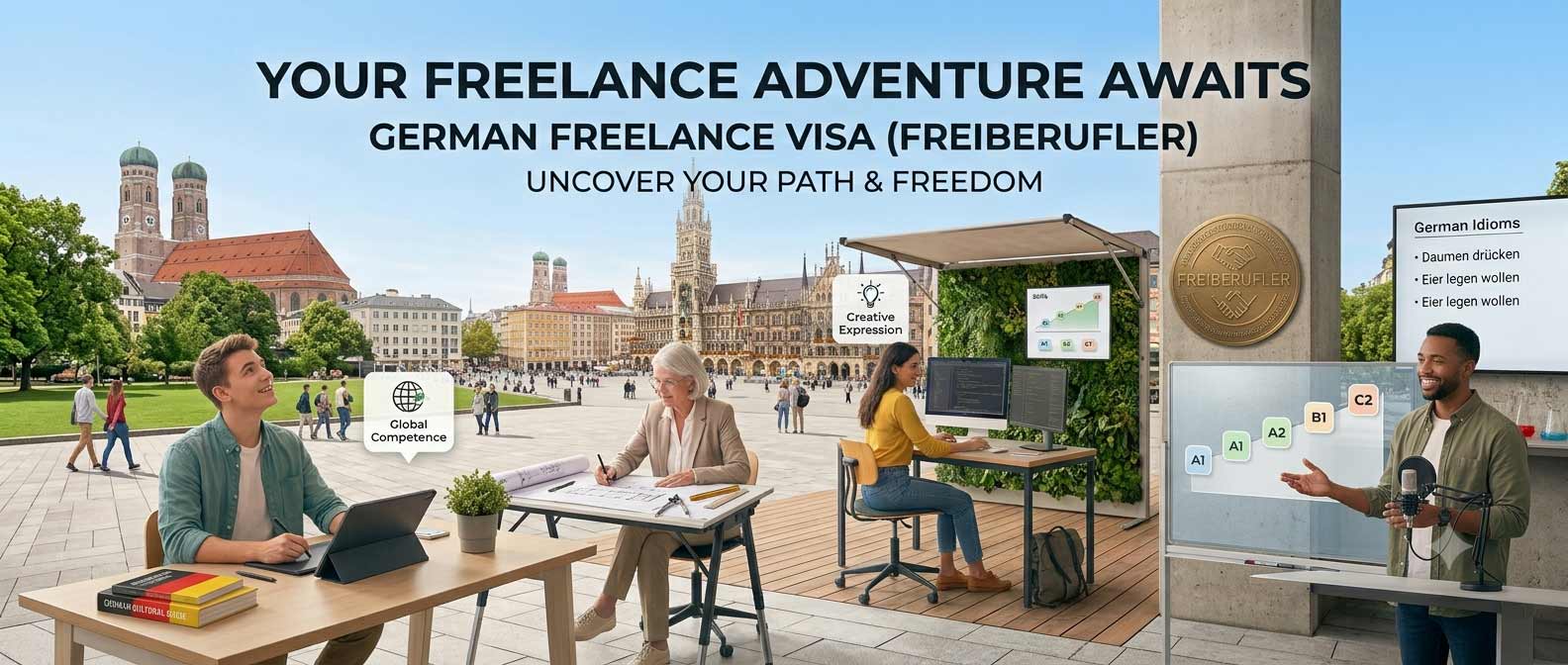
Germany has become one of Europe's most attractive destinations for freelancers, entrepreneurs, consultants, artists, writers, software developers, designers, translators, photographers and other independent professionals. Its strong economy, excellent infrastructure, growing startup ecosystem and high quality of life make it an appealing place for professionals who want to build an international career while enjoying the stability of living in one of the world's most developed countries.
If you plan to work independently instead of accepting traditional employment, the German Freelance (Freiberufler) Visa may be the ideal pathway. Unlike a standard work visa that requires sponsorship from a German employer, this residence permit allows eligible professionals to offer their services directly to clients while living legally in Germany. Whether you already have international clients or plan to build your business after moving, understanding the visa requirements and application process is essential for a successful transition.
This guide explains who qualifies for the German Freelance Visa, how it differs from other self-employment permits, the required documents, application steps, costs, advantages, common mistakes and practical tips that can improve your chances of approval.
The German Freelance Visa, commonly known as the Freiberufler Visa, is a residence permit designed for individuals who wish to work independently in Germany without being employed by a single company. It allows qualified professionals to provide services to multiple clients while residing legally in the country.
Germany distinguishes between freelancers (Freiberufler) and business owners (Gewerbetreibende). Freelancers usually perform intellectual, artistic, scientific, educational, consulting or professional services that rely primarily on their expertise rather than running a commercial business. This distinction is important because the visa requirements, tax obligations and registration process may differ depending on your profession.
The visa is especially popular among software developers, IT consultants, architects, engineers, journalists, authors, teachers, translators, designers, musicians, photographers, healthcare professionals and creative specialists who can demonstrate professional qualifications and genuine client demand for their services.
Over the past decade, Germany has experienced significant growth in remote work, digital services, startups and international entrepreneurship. Cities such as Berlin, Munich, Hamburg, Frankfurt, Cologne and Leipzig have become vibrant hubs for freelancers working in technology, media, education, consulting, finance and creative industries. Businesses increasingly hire independent specialists for short-term projects, making freelancing an attractive career option.
Beyond professional opportunities, Germany offers excellent public transport, world-class healthcare, reliable internet infrastructure, strong legal protection and a high standard of living. Many freelancers also appreciate the country's central location in Europe, allowing convenient travel and collaboration with clients across the European Union. For professionals who value stability while maintaining the flexibility of independent work, Germany provides an ideal balance.
The German Freelance Visa is intended for professionals whose occupation falls within Germany's recognized freelance categories. Applicants should possess relevant educational qualifications, professional experience or specialized skills that demonstrate their ability to earn a sustainable income through independent work.
Common professions that may qualify include:
Eligibility is not determined solely by your profession. Immigration authorities also assess whether your services are economically beneficial, whether you have realistic income prospects and whether you can financially support yourself while living in Germany.
Applicants should carefully prepare evidence that demonstrates both professional competence and financial sustainability. While individual immigration offices may request additional documentation depending on your circumstances, most applicants are expected to satisfy several core requirements before receiving approval.
Perhaps the most important requirement is demonstrating genuine client demand. Immigration authorities generally want to see that you already have potential customers or contracts rather than moving to Germany without any realistic business opportunities.
Preparing complete and well-organized documentation significantly improves your application. Missing paperwork often causes unnecessary delays or requests for additional information. Depending on your nationality and local immigration office, the exact list may vary slightly, but applicants typically prepare the following documents before submitting their application.
Having professionally translated and organized documents can help immigration officers review your application more efficiently, particularly when documents originate from outside Germany.
The application process generally begins by determining whether you must apply from your home country through a German embassy or whether you are eligible to enter Germany first and submit your residence permit application after arrival. This depends largely on your nationality and existing visa privileges.
Most applicants first gather their supporting documents, secure health insurance, prepare evidence of future clients, complete the required forms and attend an appointment with the German embassy or local immigration office. During the appointment, officials may ask questions about your profession, expected clients, projected income and long-term plans in Germany. A well-prepared application supported by realistic financial projections usually creates a stronger impression than one based on vague business ideas.
The initial validity of a German Freelance (Freiberufler) Visa depends on your profession, financial situation and the decision of the local immigration office (Ausländerbehörde). In many cases, first-time applicants receive a residence permit valid for one to three years. During this period, you are expected to actively work as a freelancer, comply with German laws, pay taxes, maintain valid health insurance and demonstrate that your freelance activities generate sufficient income to support yourself.
If your business performs well and you continue meeting all legal requirements, the permit can usually be renewed before it expires. Many freelancers eventually qualify for a long-term residence permit or even permanent residency, making the Freelance Visa an attractive pathway for professionals planning to build a long-term career in Germany.
One of the biggest differences between employment and freelancing in Germany is that freelancers are responsible for managing their own tax obligations and social contributions. After registering your freelance activity, you will normally receive a tax number from the German tax office (Finanzamt). Depending on your income and profession, you may need to submit annual tax returns, pay income tax and in certain situations, charge Value Added Tax (VAT) on your invoices.
Health insurance is also mandatory for everyone living in Germany. Freelancers can generally choose between public and private health insurance providers, depending on their eligibility and financial circumstances. Since insurance is a legal requirement, applicants should arrange suitable coverage before or immediately after arriving in Germany. Seeking professional advice from a tax consultant can help new freelancers understand their obligations and avoid costly mistakes.
The German Freelance Visa offers several advantages that make it attractive to independent professionals from around the world. Unlike employer-sponsored work visas, freelancers enjoy greater flexibility in choosing their clients, projects and working hours while still benefiting from Germany's stable economy and excellent public services.
For many professionals, the flexibility of freelancing combined with Germany's economic stability creates an ideal environment for long-term career growth.
Although many qualified professionals are eligible for a German Freelance Visa, applications are sometimes delayed or refused because important details are overlooked. Careful preparation significantly improves your chances of success.
A well-prepared application demonstrates professionalism and reassures immigration authorities that you can successfully establish yourself as a freelancer in Germany.
Yes, for many applicants, the German Freelance Visa can become a long-term pathway to settling in Germany. If you successfully operate your freelance business, maintain sufficient income, comply with tax obligations and satisfy the residence requirements established under German immigration law, you may eventually become eligible to apply for permanent residency.
Permanent residence provides greater security because it removes the need for regular visa renewals and allows you to continue living and working in Germany without many of the restrictions associated with temporary residence permits. Exact eligibility requirements vary depending on your personal circumstances and any future changes to German immigration regulations, so applicants should always verify the latest rules before planning their long-term immigration strategy.
Preparing a strong application involves much more than completing forms. Immigration authorities want to see that your freelance career is realistic, sustainable and beneficial to Germany's economy. Before applying, spend time building your portfolio, securing potential clients and organising your financial documents.
Applicants who demonstrate careful planning and professional preparation generally present a much stronger case during the visa assessment process.
Yes. Many freelancers continue serving international clients while residing in Germany, provided they comply with German tax and immigration regulations.
German language proficiency is not always a formal visa requirement, but learning German can greatly improve networking opportunities, client communication and everyday life.
Depending on your residence status and financial circumstances, eligible family members may be able to apply for family reunification under applicable German immigration rules.
No. The Freiberufler Visa is intended for recognised freelance professions, while commercial entrepreneurs operating businesses usually apply under different self-employment provisions.
The German Freelance (Freiberufler) Visa offers an excellent opportunity for skilled professionals who want the flexibility of independent work while enjoying the benefits of living in Germany. From software developers and consultants to artists, writers, translators, architects and designers, thousands of international professionals choose Germany every year because of its strong economy, high quality of life and supportive business environment. Success, however, depends on careful preparation, realistic financial planning and a well-documented application.
If you are considering freelancing in Germany, start preparing your portfolio, client network, financial plan and supporting documents well in advance. A strong application not only increases your chances of receiving the German Freelance Visa but also lays the foundation for a successful long-term career in one of Europe's most attractive destinations for independent professionals.

 ▼
▼
 Deutsch
  Artikel Quiz
 German Grammar