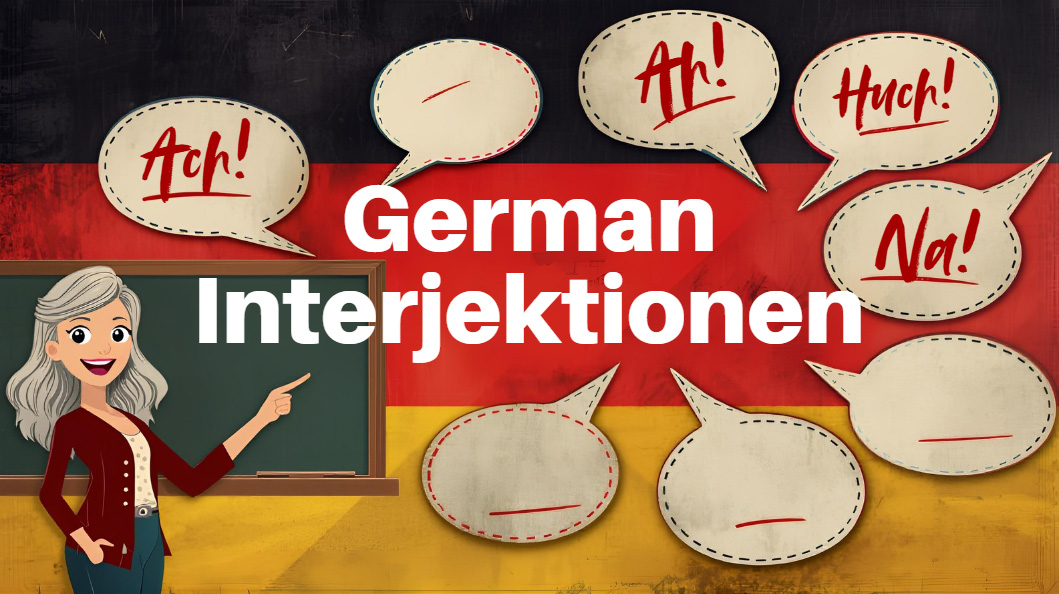
German interjections, known as Interjektionen, are short words or expressions used to show emotions, reactions or sudden feelings. They are often followed by an exclamation mark (!) and can stand alone in a sentence.
Interjections express feelings such as joy, surprise, pain, anger or hesitation. They are commonly used in spoken German and informal writing.
| German | English Meaning | Usage Example |
|---|---|---|
| Ach! | Oh! / Ah! | Ach! Das ist schade. (Oh! That’s a pity.) |
| Oh! | Oh! | Oh! Wie schön! (Oh! How nice!) |
| Na! | Well! / Hey! | Na, wie geht’s? (Hey, how are you?) |
| Hm... | Hmm... | Hm... Ich weiß nicht. (Hmm... I don’t know.) |
| Igitt! | Yuck! / Ew! | Igitt! Das riecht schlecht! (Yuck! That smells bad!) |
| Oh nein! | Oh no! | Oh nein! Ich habe meinen Schlüssel verloren. (Oh no! I lost my key.) |
| Hurra! | Hooray! | Hurra! Wir haben gewonnen! (Hooray! We won!) |
| Au! | Ouch! | Au! Das tut weh! (Ouch! That hurts!) |
| Pfui! | Disgusting! / Shame! | Pfui! Das ist gemein! (Disgusting! That’s mean!) |
| Tja... | Well... / Hmm... | Tja... so ist das Leben. (Well... that’s life.) |

 ▼
▼
 Deutsch
  Artikel Quiz
 German Grammar